
Tag: Lifestyle

  • Asian Granito India Limited Honoured as Best Integrated Home and Surface Solutions Brand at Times Realty Awards Gujarat 2026

    Asian Granito India Limited Honoured as Best Integrated Home and Surface Solutions Brand at Times Realty Awards Gujarat 2026

    The recognition reflects AGL’s integrated solutions approach, strong market presence and continued focus on innovation and sustainable growth

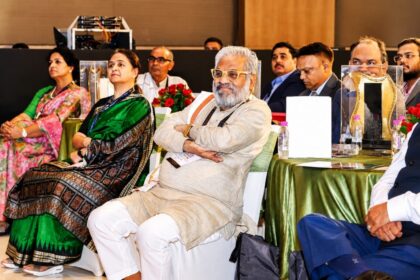
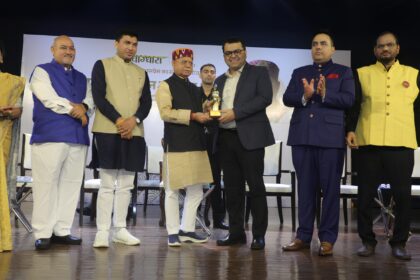
    Ahmedabad (Gujarat) [India], February 28: Asian Granito India Limited (AGL), one of the largest Luxury Surfaces and Bathware Solutions brands in the country, has been honoured with the prestigious title of Best Integrated Home and Surface Solutions Brand at the Times Realty Awards Gujarat 2026 Powered by GoodHomes. The award was presented by noted actor and television host Mandira Bedi and was received on behalf of the Company by Mr. Hiren Patel, Associate Director, Asian Granito India Limited, in the presence of senior members of the organising committee. This recognition highlights AGL’s strong leadership in offering complete surface and bathware solutions under one roof and reinforces its position as a trusted brand in the real estate and design industry.

    Asian Granito India Limited Honoured as Best Integrated Home and Surface Solutions Brand at Times Realty Awards Gujarat 2026-PNN

    The event marked a significant milestone as the Times Realty Awards were introduced in Gujarat, bringing the state onto this prestigious national platform. Organised by The Times Group and powered by GoodHomes, the awards celebrate excellence in real estate, architecture and design. The platform recognises outstanding developers, architectural firms, design practices and allied brands across multiple categories. It also honours innovation, quality, sustainability and customer focused growth. The event saw the presence of leading industry experts and decision makers from across the region.

    Commenting on this achievement, Mr. Kamlesh Patel, Chairman and Managing Director, Asian Granito India Limited, said, “We are truly honoured to receive this recognition at the Times Realty Awards Gujarat 2026. I sincerely thank the jury, The Times Group and GoodHomes for acknowledging our efforts and vision. This award reflects our strong integrated approach, where we offer complete surface and bathware solutions under one roof. Quality has always been the foundation of our brand. Innovation and sustainability continue to guide our growth journey. With the continued trust of our customers and partners, we aim to further strengthen our distribution network and expand our national and global presence in the coming years.”

    Over the years, AGL has received several recognitions for its contribution to the construction and building materials industry. The company was honoured with the ET Focus Award for Best Brand in the Construction and Infrastructure Industry in Tiles by The Economic Times and also marked its presence at the Times Now Radiant Gujarat Visionary Leaders 2025 event, reinforcing its leadership in the construction sector, while Mr. Shaunak Patel was conferred with the Times GenNext Award Gujarat for his dynamic leadership driving AGL’s global ambitions, along with many other industry honours that reflect the brand’s consistent focus on quality, innovation and growth.

    Asian Granito India Limited Honoured as Best Integrated Home and Surface Solutions Brand at Times Realty Awards Gujarat 2026-PNN

    In a short span of two & half decade, Asian Granito India Ltd has emerged as India’s leading Luxury Surfaces and Bathware Solutions brand. The Company manufacture and markets a range of Tiles, Engineered Marble and Quartz, Sanitaryware and Faucets. The Company has 277 plus exclusive franchisee showrooms, 13 company owned display centers and an extensive marketing and distribution network pan India with 18,000 plus touchpoints including distributors, dealers and sub-dealers in India. The Company also exports to more than 100 countries.

    About AGL:  https://aglasiangranito.com/

    Established in the year 2000, AGL has emerged as India’s leading Luxury Surfaces and Bathware Solutions brand in a short span of two & Half decades. The Company manufactures and markets a wide range of Tiles, Engineered Marble and Quartz, Bathware and Faucets. AGL products are synonymous with reliability, adaptability, innovation, quality consciousness and the company has created a strong brand identity, well recognized globally and loyal customer following across segments. Today it is 4th largest listed ceramic tile company in India with Strength of more than 700 field force.

    Ranked amongst the top ceramic tiles companies in India, AGL has achieved over 65 times growth in its production capacity, from 0.83 Million Sq. Mtrs. Per Annum in FY 2000 to 54.5 Million Sq. Mtrs. Per Annum in FY 2025. AGL is also the only tiles company to be acknowledged in the Vibrant Gujarat Summit 2015 for achieving phenomenal growth.

    The Company has 14 state-of-the-art manufacturing units spread across Gujarat and 277 plus exclusive franchisee showrooms, 13 company owned display centres across India. Further, the Company has an extensive marketing and distribution network pan India with 18,000 plus touchpoints including distributors, dealers and sub-dealers in India. The company also exports to more than 100 countries.

    If you object to the content of this press release, please notify us at pr.error.rectification@gmail.com. We will respond and rectify the situation within 24 hours.

  • More Than a Ride: Mumbai Autowalas Offer Mental Health Check-Ins

    More Than a Ride: Mumbai Autowalas Offer Mental Health Check-Ins

    Mumbai (Maharashtra) [India], February 27: Across Mumbai’s suburbs, including Malad, Andheri, JVLR, and Bandra, auto-rickshaws recently began carrying short, reflective lines about overthinking, stress, and emotional burnout. The messages appeared on everyday commutes, quietly meeting people where they already were: in traffic, between signals, in moments of pause.

    The street-level intervention was launched by mental health startup Infiheal alongside auto-rickshaw drivers across the city, bringing conversations around emotional well-being into one of Mumbai’s most routine and shared spaces, the daily commute.

    The messages offered no advice or instructions. Instead, they reflected what many commuters were already feeling, prompting riders to pause, reflect, and sometimes share. Images of the autos soon began circulating on social media, accompanied by reactions such as, “Didn’t expect a reminder like this between signals,” and “When your auto ride turns into a mental check-in.”

    According to the founders, the month-long campaign “HealOnAuto” was rooted in a simple insight: in Mumbai, emotional strain often blends into the background noise of daily life. By placing mental health messages directly into everyday routes, the initiative suggested that mental health isn’t separate from the city’s rhythm, it moves with it.

    For the auto drivers involved, the campaign felt deeply personal. Jugal, the auto-rickshaw driver who lead the initiative across the Western Line, shared that most passengers today are constantly in a rush and visibly stressed, often repeating “jaldi karo” throughout the ride. He added that people need to slow down, spend more time with friends and family, step out together, and live more like a community, not just individuals moving from one place to another.

    At a time when AI-led mental health tools and digital therapy platforms are seeing rapid adoption across urban India, the campaign served as a reminder that conversations around emotional well-being do not always need to begin online or in clinical settings. Sometimes, they start in ordinary moments, led by people who witness the city’s stress up close every day.

    “Mental health doesn’t always need a screen or a clinical setting to begin,” said Srishti Srivastava, co-founder of Infiheal. “We wanted to start the conversation where people already are, in transit, in between moments, because that’s often where stress quietly lives.”

    About Infiheal

    Infiheal is a Mumbai-based health-tech startup founded by Srishti Srivastava (IIT Bombay alum) and Utkarsh Srivastava, focused on making mental health care accessible, affordable, and stigma-free. The startup was featured by Prime Minister Narendra Modi in the 108th episode of Mann Ki Baat and is best known for Healo AI, a wellness platform that combines an AI mental health chatbot with expert-led therapy, psychometric assessments, journaling, meditation, and self-help tools in 93+ languages.

    Infiheal builds AI models for mental health using one of the world’s largest therapy datasets, guided by responsible AI principles and supported by multiple layers of safety moderation and human-in-the-loop escalation for sensitive situations. In just over a year, the platform has reached nearly one million users and was recently represented at the World Economic Forum in Davos, where the founders spoke on the intersection of AI, health, and safety.

    Last week, Infiheal also emerged as the winner at the ‘AI for All Global Impact Challenge’ at the India AI Summit 2026, New Delhi, a winner from over 10,000 applicants across 70+ countries and had its showcase graced by  Hon’ble Prime Minister Narendra Modi. Awarded with a cash prize of INR 25 lakhs, which was presented by Shri Ashwini Vaishnaw, Shri Jitin Prasada and Shri Abhishek Singh. Their vision and victory was also lauded by global leaders, including Sundar Pichai and Rishi Sunak, at an event that brought together visionaries such as Dario Amodei, Demis Hassabis, Mukesh Ambani, Emmanuel Macron and António Guterres, Sam Altman, among many other distinguished global leaders.

    If you object to the content of this press release, please notify us at pr.error.rectification@gmail.com. We will respond and rectify the situation within 24 hours.


  • The Algorithm His Mother Built

    The Algorithm His Mother Built

    Before there were patents and billion-dollar supply chains, there was a woman standing outside a headmaster’s office. Every morning. For a year. Shekhar Natarajan is still running the code she wrote.

    Hyderabad (Telangana) [India], February 27: The school uniform is plaid — the kind of cheap synthetic fabric that softens with age, that every laundry cycle softens a little more until it starts to look like something worn with love rather than worn out. A hundred children are wearing it on this particular morning in a courtyard of cracked concrete in one of Hyderabad’s underserved settlements. They’ve crowded around a tall man in a white kurta, pressing against his arms, some reaching up to touch his sleeve, the way children everywhere test whether a visitor is real or just passing through.

    Shekhar Natarajan, 45, does not look like a man who holds more than seventy patents. He does not look like someone who transformed a $30 million grocery operation into a $5 billion business for Walmart, or who is preparing, in a matter of weeks, to address the World Economic Forum on the future of artificial intelligence. What he looks like, standing in this courtyard, is someone who grew up somewhere very much like this.

    Which is, of course, exactly the point.

    I. The Founding Investment

    There is a specific kind of financial transaction that economists do not study: the pawning of a wedding ring to pay a school fee. It is not venture capital. It is not seed funding. It does not appear in any balance sheet or pitch deck. But Natarajan will tell you, if you ask him the right question, that it is the foundational investment behind everything he has built.

    His mother — a woman from South Central India whose name he invokes with a particular quality of stillness — sold her wedding ring for thirty rupees when the family needed to fund his education. Thirty rupees. In today’s money, the kind of amount that wouldn’t buy you a cup of filter coffee in the Hyderabad café district. In the economy of sacrifice, it was everything.

    But the money was only the half of it. The other half was time.

    “She stood outside the headmaster’s office,” Natarajan says. “Every day. For three hundred and sixty-five days. Not because she had an appointment. Not because she had leverage. Because she had decided that this was where she would stand until something changed.”

    He pauses here, in the way of a man who has told this story many times and has still not found words adequate to it.

    “I don’t know another word for that except love. That kind of love is not a feeling. It is a technology. It produces outcomes.”

    “She didn’t have power. She didn’t have access. She just had a decision. I’ve been trying to build AI systems with that same architecture ever since.”

    II. The $34 Suitcase

    He arrived in America with thirty-four dollars. He does not say this for drama — or not primarily for drama. He says it because he believes it is a data point, evidence in an argument he has been constructing for three decades: that the circumstances of a person’s origin tell you almost nothing about the ceiling of their potential, and that any system — political, institutional, technological — that treats origin as destiny is not just unjust but functionally stupid.

    From thirty-four dollars, Natarajan built a career that took him through Georgia Tech, MIT, Harvard Business School, and IESE, and then into senior roles at some of the most recognizable consumer brands in the world. The man who grew up watching his mother stand in a corridor for a year would eventually help architect a logistics transformation at Walmart that moved nine-figure grocery revenues to ten-figure ones. He would contribute to innovation at Disney. He would accumulate patents — over seventy of them — the way some people accumulate degrees.

    But the career, as impressive as it is on paper, is not the story he is trying to tell. It is the context for the story he is trying to tell.

    “Every system I worked inside,” he says, “was optimizing for the wrong thing. Faster, cheaper, more efficient — yes. But more human? More dignified? That wasn’t in the KPIs. And I kept thinking: we have the most powerful technology in human history, and we’re using it to serve people who are already served.”

    III. What Silicon Valley Gets Wrong

    The artificial intelligence industry, in Natarajan’s view, has a fundamental architectural flaw — and it is not a technical one.

    “The flaw is philosophical,” he says. “Every major AI system is built with ethics as a constraint. You build the system first, optimize it for performance, and then someone in a governance meeting asks: ‘wait, is this fair? Is this safe? Does this harm people?’ And then you bolt on a filter. You put guardrails on the outside.”

    He leans forward. This is clearly a distinction that matters to him with almost physical intensity.

    “My mother did not put compassion on the outside of her decisions as a filter. It was the decision. The love was the architecture, not the guardrail. That is what I am trying to build.”

    He calls it Angelic Intelligence — a framework built on what he describes as virtue-native AI, where ethical reasoning is not applied after the fact but embedded in the computational substrate itself. His 27 Digital Angels, a framework drawing on cross-cultural traditions of virtue from Confucian ethics to Ubuntu philosophy to the Vedantic concept of dharma, are not filters on top of a system. They are, in his formulation, the system.

    The concept will be tested. Every ambitious framework in AI eventually meets the grinding specificity of the real world — the edge cases, the adversarial inputs, the competing stakeholder interests. Natarajan knows this. He has spent enough time in Fortune 500 boardrooms to understand the distance between a compelling idea and a deployed technology.

    “The companies building AI fastest are not asking what it should be. They are asking what it can do. Those are not the same question.”

    IV. The Boy in the Courtyard

    Back in the courtyard, a girl — maybe eight years old, her uniform slightly too big for her, sleeves rolled up — has taken his hand. He has stopped mid-sentence in conversation with a visiting journalist. He kneels down.

    They look at each other for a moment that is longer than it should be, given that they have never met. She has the unsentimental gaze of a child who has learned to take the measure of adults quickly.

    He says something to her in Telugu. She says something back. He laughs.

    “She told me my shoes are dirty,” he translates, standing up.

    They are. He has walked through the settlement’s unpaved lanes to get here, and his leather shoes are coated in the reddish-brown dust that is, in some sense, the geological record of this part of the city.

    He doesn’t seem bothered. He looks, if anything, pleased.

    “Children here see everything,” he says. “They miss nothing. The question is only whether the world will build systems that see them back.”

    V. A Thousand-Year Problem

    Every morning at 4 AM — before the technology industry wakes up, before the markets open, before the conference calls begin — Shekhar Natarajan paints. Classical Indian forms. He has done this for years. It is, he explains, less a hobby than a discipline of attention.

    “Painting teaches you that the good things take time,” he says. “There is no shortcut in a brushstroke. The hand learns slowly. The eye learns slowly. Wisdom accumulates like sediment.”

    He is preparing to speak at Davos and at the Future Investment Initiative in Riyadh — rooms full of the people who will make decisions about AI’s trajectory over the next decade. His message there will be, in essence, the same as his message in this courtyard: that the technology being built right now is making choices about who gets to be seen, and those choices have consequences that will outlast the quarterly earnings cycle by several centuries.

    “The Indian intellectual tradition thinks in ten-thousand-year cycles,” he says. “Silicon Valley thinks in eighteen-month product roadmaps. Somewhere in between those two timeframes is the actual problem.”

    He is, it should be said, not without self-awareness about the scale of his ambition — or its risks. He is building a company, not just a philosophy. The patents are real. The business models are real. The gap between virtue-native AI as concept and virtue-native AI as deployed infrastructure is real and large and requires capital and engineering talent and enterprise customers.

    He talks about all of this without apparent anxiety, which is either the equanimity of a man who has made peace with uncertainty or the confidence of one who has been in harder rooms than a venture capital pitch meeting. Given the biography, both seem plausible.

    “I left India with thirty-four dollars. I’ve been in deficit before. The question is not what you start with. The question is what you are oriented toward.”

    Coda: The Boomerang

    An hour after arriving, Natarajan is preparing to leave. The children have mostly dispersed back into their classrooms. The courtyard is quieter now, just a few stragglers and the low sound of a lesson being conducted somewhere inside the building.

    He stops at the gate. Looks back.

    “My parents sent something into the world,” he says, not to the journalist exactly, more to the general air of the place. “My mother with her ring and her three hundred and sixty-five mornings. My father with his quiet generosity. They sent it forward. And it came back to me — as opportunities, as mentors, as the people who appeared exactly when I needed them to appear.”

    He is quiet for a moment.

    “Now I have to send it forward again. That is all this is. That is what Angelic Intelligence is. The ring my mother pawned — I’m trying to give it back. A million times over. In a form she never could have imagined but would immediately recognize.”

    He walks out through the gate. Behind him, through the window of a classroom, a girl is writing something on a chalkboard.

    She doesn’t know a man just stood in her courtyard who grew up somewhere very much like this place, who left with thirty-four dollars, who came back decades later convinced that the most important thing he could build was not a faster supply chain or a more efficient algorithm, but something that learned — structurally, computationally, irreversibly — to see people like her.

    She’s just doing her homework.

    But the room she’s sitting in has electricity now. And somewhere, invisibly, a technology is being designed that might one day look at her and decide she is worth seeing.

    Her mother’s sacrifice — whatever form it took, whatever ring she may have pawned or corridor she may have stood in — is already in the system.

    That’s the bet, anyway.

    If you object to the content of this press release, please notify us at pr.error.rectification@gmail.com. We will respond and rectify the situation within 24 hours.

  • Influencer Act Wins Multiple Honors at BW Next Gen Digi Content Awards 2025; Surpasses 1 Billion Campaign Reach in 2024–25

    Influencer Act Wins Multiple Honors at BW Next Gen Digi Content Awards 2025; Surpasses 1 Billion Campaign Reach in 2024–25

    New Delhi [India], February 27: Influencer Act, a Noida-based influencer marketing and digital strategy agency, has secured multiple awards at the BW Next Gen Digi Content Awards 2025, held at Eros Hotel, Nehru Place, New Delhi.

    The agency was recognized across three key categories — Best Regional Influencer Collaboration – Silver category, Excellence in Finance Content Marketing– Gold category, and Influencer Marketing Agency of the Year– Silver category — highlighting its performance-driven approach to influencer-led digital campaigns.

    The BW Next Gen Digi Content Awards recognize innovation, effectiveness, and measurable impact in digital marketing and content strategy. The event was attended by brand leaders, marketing professionals, and digital agencies from across India.

    Award-Winning Campaign Excellence

    Influencer Act received the Best Regional Influencer Collaboration award for executing region-specific campaigns that leveraged vernacular creators and culturally aligned storytelling to drive authentic engagement across diverse Indian markets.

    In the finance category, the agency was honored for simplifying complex financial concepts into accessible, relatable digital content. The recognition reflects its growing presence in BFSI-focused influencer campaigns, with an emphasis on trust-building and compliance-sensitive communication.

    The agency was also named Influencer Marketing Agency of the Year, acknowledging its structured campaign execution, creator partnerships, and measurable business outcomes.

    Performance Metrics Driving Recognition

    During 2024–25, Influencer Act executed over 150+ influencer marketing campaigns, generating a cumulative campaign reach exceeding 1 billion impressions across platforms.

    According to the company, its campaigns delivered an average engagement rate approximately 8% higher than industry benchmarks (2.5%), reflecting strong audience alignment and content relevance. The agency also reported an average ROI uplift of 4.5%, supported by cost-efficient influencer selection and data-backed media optimization strategies.

    The company attributes these outcomes to its audience-first campaign philosophy. Before campaign development, the agency evaluates the real-world usefulness and relevance of a product for its target consumers. This approach is designed to ensure that campaigns remain relatable to audiences while delivering measurable ROI and sustainable engagement for brands.

    A spokesperson for Influencer Act said, “We focus on aligning product value with authentic storytelling. When campaigns are built around genuine audience utility, performance metrics naturally follow. Our goal is to combine creativity with accountability.”

     Consistency Beyond Award Categories

    The agency stated that its work extends beyond the award-winning categories and spans multiple sectors, delivering consistent creative and strategic execution across campaigns. Influencer Act follows a structured model that includes audience research, influencer identification, regional strategy development, content creation, execution, and performance tracking.

    With these recognitions, the company said it plans to further strengthen its focus on regional influencer marketing, finance content campaigns, and performance-led digital strategies.

    About Influencer Act

    Influencer Act is a Noida-based influencer marketing and digital strategy agency specializing in influencer-led campaigns, regional content marketing, and performance-driven brand collaborations. The agency works with brands across BFSI, lifestyle, and emerging digital sectors, delivering ROI-focused campaigns through data-backed planning and creator partnerships.

    Contact

    Influencer Act

    Sector 63, Noida, Uttar Pradesh

    Visit: www.influenceract.com

    If you object to the content of this press release, please notify us at pr.error.rectification@gmail.com. We will respond and rectify the situation within 24 hours.

  • Parimatch Partners with Cricket Superstar and Game Changer Eoin Morgan

    Parimatch Partners with Cricket Superstar and Game Changer Eoin Morgan

    New Delhi [India], February 26: Parimatch is excited to announce the start of a partnership with an Irish and British former cricketer and current commentator, Eoin Morgan, who will join the brand as its Chief Cricket Analyst during the upcoming Indian Premier League season. Thanks to this collaboration, the Parimatch cricket community will be the first to enjoy exclusive expert insights throughout the league.

    Eoin Morgan is one of the most influential players in modern cricket and a true leader. He led England to the Cricket World Cup Final in India and captained the England India Premier League team to finals appearances. A double World Cup winner, he guided England to the 2019 World Cup triumph and was part of the 2010 World Cup winning squad. His approach has set new standards for teams and inspired the next generation of players.

    Eoin has built a powerful personal brand across the subcontinent, where he is a household name thanks to his prominent roles as both a host and commentator on multiple leading TV networks, including Star Sports and Sports18.

    “I’m proud to join Parimatch as Chief Cricket Analyst. I will bring my experience at the top of the game and will share insights, tactical views, and commentary that give fans an insider perspective on the Cricket World Cup and the India Premier League. I look forward to engaging with the community, answering questions, and helping audiences see the strategies, decisions, and moments that make this sport extraordinary,” said Eoin Morgan.

    “Eoin Morgan is one of the most renowned figures in cricket today. His professionalism and charisma make him an ideal partner for Parimatch. We are very excited for the upcoming cricket season, where devoted followers will be able to get closer to his perspective on the game and witness a player who has shaped cricket,” commented the Parimatch Press Office.

    Fans will have the chance to participate in live discussions, ask questions, and explore the game from a player’s perspective, connecting directly with the excitement of top-level cricket. The cricket community can follow Eoin on Parimatch’ social media for expert takes, match insights, and behind-the-scenes moments during the Cricket World Cup and the Indian Premier League season. Together, they celebrate the spirit of cricket while giving fans a front-row seat to the action and the minds behind the game.

    About Parimatch 

    Parimatch is the #1 global gaming platform that provides a complete suite of sports and online gaming services to its customers. Since 1994, Parimatch has grown to be enjoyed by 3,000,000 active users worldwide. It is trusted by the world’s top athletes and sporting organizations. Parimatch is the Official Partner of the Joburg Super Kings, a leading team in the SA20 league. Trinidadian Sunil Narine, Australian David Warner and South African Jonty Rhodes, cricket legends, proudly represent the brand as ambassadors. Parimatch is also the Official Partner of iconic football clubs Manchester United and Leeds United. Since 2019, Parimatch has been one of the leading betting brands in Africa, Asia, and Latin America.

    If you object to the content of this press release, please notify us at pr.error.rectification@gmail.com. We will respond and rectify the situation within 24 hours.

  • The Man Who Taught Machines to Love

    The Man Who Taught Machines to Love

    New Delhi [India], February 26: Before dawn each morning in the city that never quite sleeps, a man picks up a brush. Not a stylus, not a keyboard — a brush. He practices classical Indian painting the way monks practice prayer: not to produce something, but to become someone. By 5 AM, Shekhar Natarajan has already done the most important work of his day. The code can wait. The patents can wait. The world’s most prestigious forums — Davos, Riyadh, New Delhi — can wait. First, there is the discipline of beauty.

    On February 20, 2026, inside the cavernous hall of Bharat Mandapam — the same stage where India had just hosted global leaders, pledged hundreds of billions in AI investment, and declared itself the world’s alternative to a two-nation silicon race — a man from South Central India stood before an audience of policymakers, technology executives, and international journalists and told them, quietly, that they were building the wrong thing.

    The standing ovation came not when he was done. It came mid-sentence.

    “If you have to teach a machine not to be harmful, you have already built the wrong machine. Angelic Intelligence starts from a different place entirely — it starts from love.”

    — Shekhar Natarajan, AI Summit on Trust, Safety & Governance, New Delhi

    1. THE WRONG QUESTION

    The global conversation about artificial intelligence has, for the better part of a decade, been consumed by a single question: how do we stop it from going wrong? Guardrails. Compliance checklists. Ethics committees assembled in the aftermath of systems already deployed. It is, Natarajan argues, the equivalent of designing a car and only then asking whether it should have brakes.

    His framework — Angelic Intelligence — inverts the premise entirely. Rather than constraining behavior after the fact, it asks what it would mean to build virtue directly into the computational substrate of a machine. Not as a layer of rules on top of capability, but as the architecture itself. His 27 Digital Angels are not filters. They are the engine.

    Twenty-seven AI agents — each embodying cross-cultural virtues like compassion, justice, and wisdom — that collaborate in real time to make decisions the way, Natarajan says, a truly good person does: not by consulting a rulebook, but by being unable to do otherwise.

    27

    DIGITAL ANGELS

    70+

    PATENTS FILED

    30¢

    A WEDDING RING, PAWNED

    2. THE ORIGIN STORY THAT CAN’T BE GAMED

    There is a moment in every great story where you understand that the protagonist could not have arrived anywhere else. For Natarajan, that moment is a woman standing outside a headmaster’s office.

    His mother stood there for three hundred and sixty-five consecutive days. Not to demand something extraordinary. Only to secure her son’s admission to school. She had already pawned her wedding ring — thirty rupees — to pay his fees. The electricity at home was unreliable, so the boy studied under streetlights. These are not metaphors. They are the literal infrastructure of his education.

    He arrived in America with $34. He left behind a country where sacrifice was not a strategy but a way of life. And somewhere between those two facts, he built a philosophy that Silicon Valley, for all its capital and computing power, has not been able to replicate.

    “My mother stood outside a headmaster’s office for 365 days so I could get an education. That kind of love — that sacrifice — is what I want to encode into the machines we build.” — Shekhar Natarajan

    The journey from those streetlights to the boardrooms of Walmart, Disney, Coca-Cola, and Target is remarkable enough. Natarajan grew Walmart’s grocery business from $30 million to $5 billion — a 166x multiplier — a number that strains credulity until you understand that the man behind it was not optimizing. He was, in his own terminology, building with love.

    3. WHAT 800 MILLION PEOPLE HEARD

    When the World Economic Forum invitation arrived, it did not come through the traditional channels — an academic appointment, a government advisory role, a prior Davos appearance. It came because 800 million people, across cultures and time zones and political persuasions, had watched something Natarajan made and felt something they did not expect to feel about artificial intelligence: hope, without sentimentality.

    A program director at a major global policy forum described the shift: institutions are accustomed to inviting people because of their institutional positions. This invitation was because of reach — a demonstrated ability to articulate something that resonates with hundreds of millions of people. That, the director said, is a fundamental shift in how we identify relevant voices.

    Invitations followed from the Future Investment Initiative in Riyadh, the Munich Security Conference, and multiple government advisory bodies. Each cited the same justification. Each was asking, in its own way, the question that the New Delhi audience had just answered by rising to their feet: what if this man is right?

    4. THE PAINTER’S METHOD

    There is a detail that Natarajan offered at the summit, almost in passing, that his audience will not have expected. Every morning at 4 AM, before the code and the boardrooms and the keynotes, he practices classical Indian painting. He did not offer this as a charming biographical footnote. He offered it as a design principle.

    “It taught me that the best solutions come not from speed, but from patience,” he said. “We must build AI with love, not just with code.”

    For a field defined by its obsession with velocity — faster training runs, faster deployment, faster iteration — this is either naïve or visionary. The record of Natarajan’s career suggests the latter. He holds more than 70 patents. He built supply chain systems at the intersection of AI and human dignity. He speaks not of technology’s roadmap but of its thousand-year implications.

    5. A CIVILIZATIONAL WAGER

    What Natarajan is proposing is not, at its core, a technology argument. It is a philosophical bet: that the constraints Silicon Valley applies to artificial intelligence after the fact are symptoms of a deeper error — the belief that optimization is neutral, that speed is always good, that efficiency metrics can stand in for human values.

    He watched that belief play out across two and a half decades in the world’s most admired corporations. He saw what happens when systems built purely to maximize metrics encounter the irreducible complexity of human lives. And then, with the patience of a painter and the strategic acuity of someone who scaled a $5 billion business, he decided to build something different.

    At Bharat Mandapam — where India declared itself an alternative to the Washington-Beijing duopoly — Shekhar Natarajan offered a third alternative: not faster, not bigger, but better. Built, from the first line of code, with love.

    THE JOURNEY

    South Central India

    Studies under streetlights. Mother pawns her wedding ring for 30 rupees. Stands outside a headmaster’s office for 365 consecutive days.

    Arrives in America

    $34 in pocket. Georgia Tech, MIT, Harvard Business School, and IESE ahead of him.

    Fortune 500 Years

    Walmart. Disney. Coca-Cola. PepsiCo. Target. American Eagle. Walmart grocery: $30M → $5B.

    Orchestro.AI Founded

    Angelic Intelligence conceived. 70+ patents filed. The 27 Digital Angels architecture developed.

    February 20, 2026

    Standing ovation at Bharat Mandapam. WEF, FII, Munich Security Conference invitations. 800M views and counting.

    “If AI cannot understand dignity, it has no business making decisions about human lives.”

    He stood under streetlights as a child to learn. He is standing under much brighter lights now. The question being asked — the one the standing ovation answered — is whether the world is ready to learn in return.

    If you have any objection to this press release content, kindly contact pr.error.rectification@gmail.com to notify us. We will respond and rectify the situation in the next 24 hours.

  • The Ancient Wisdom Behind Tomorrow’s AI

    The Ancient Wisdom Behind Tomorrow’s AI

    Shekhar Natarajan, Founder & CEO of Orchestro.AI — the architect of Angelic Intelligence

    New Delhi [India], February 25: There is a word in Sanskrit — Viveka — that has no precise English translation. It means something like “discernment,” but richer than that: the capacity to distinguish between the real and the illusory, between what serves human flourishing and what merely appears to. For millennia, Indian philosophy considered viveka not a personality trait but a discipline — something cultivated through practice, reflection, and a willingness to sit with complexity rather than collapse it into convenience.

    Shekhar Natarajan believes the AI industry has never learned it. He has spent his career trying to build it into the machines themselves.

    Natarajan, the founder and CEO of Orchestro.AI and the architect of what he calls “Angelic Intelligence,” is making one of the most provocative arguments in technology today: that artificial intelligence’s fundamental crisis is not a technical problem. It is a philosophical one. And that the civilization best equipped to solve it may be the one the industry has most consistently overlooked.

    “The question of what makes us human was not first asked by Silicon Valley. It was asked in Sanskrit, in Tamil, in Pali — by thinkers who had no electricity but understood consequence.”
    — Shekhar Natarajan

    A Continent of Consciousness, Not Just Code

    To understand what Angelic Intelligence is, you must first understand the civilization from which its creator emerged.

    India is not merely a country. It is an argument — 5,000 years old and still unresolved — about the nature of righteousness, duty, truth, and human flourishing. It is a land where the Mahabharata’s 1.8 million words explore every moral permutation of power and consequence. Where the Arthashastra codified statecraft and ethics simultaneously, insisting the two cannot be separated. Where the Buddha, Mahavira, Adi Shankaracharya, and the Sufi saints all walked the same soil and arrived at different, equally profound answers to what it means to live well.

    This is a civilization that gave the world the concept of ahimsa — non-harm — as a governing principle, not merely a personal virtue. That articulated dharma not as religion, but as the contextual rightness of action: what a doctor must do differs from what a soldier must do, what a parent owes a child differs from what a judge owes a defendant. Context shapes virtue. Virtue shapes consequence. Consequence shapes civilization.

    In a nation of 22 officially recognized languages and hundreds of dialects, where a 100-kilometer journey can cross three distinct culinary traditions, four linguistic families, and centuries of layered religious history, the very idea of “one size fits all” has always been a kind of philosophical absurdity. India’s diversity is not a complication to be managed. It is its greatest epistemological contribution — the lived, embodied knowledge that wisdom must be contextual to be wisdom at all.

    This is precisely what Natarajan’s work accuses current AI of failing to understand. “Hospitals need compassion. Banks need prudence. Legal firms need precision,” he argues. “Current AI treats them all the same: optimal for nothing, adaptable to no one.” The Bhagavad Gita articulated something remarkably similar, roughly 2,500 years ago.

    The Boy From South Central India

    Natarajan did not arrive in America carrying inherited advantage. He arrived with $34 and an education paid for, in the most literal sense, by love. His mother — a woman whose story has since accumulated 2 billion social media views — stood outside a headmaster’s office for 365 consecutive days to secure her son’s admission to school. She pawned her wedding ring for 30 rupees to fund his education. She made the kind of sacrifices that do not appear in venture capital term sheets or product roadmaps, but that quietly determine the moral architecture of the people who go on to build things that matter.

    This story is not simply heartwarming. In Natarajan’s telling, it is a design specification.

    It represents something that runs deep in the South Indian tradition he comes from — the fierce, patient, unglamorous belief that education is sacred. Families across Tamil Nadu, Andhra Pradesh, Karnataka, and Telangana have staked everything — land, gold, futures — on the education of their children, not because they expected returns, but because they understood, in their bones, that knowledge is the one thing that cannot be taken away.

    “Technology built with love, not speed” is the philosophy he returns to again and again — a phrase that sounds almost naive in an industry that celebrates the move-fast-and-break-things ethos, until you realize that what has been broken, repeatedly and at scale, is human trust.

    2B+

    SOCIAL VIEWS

    43

    PATENTS FILED

    70+

    TOTAL PATENTS

    25+

    YEARS FORTUNE 500

    Angelic Intelligence: Ancient Architecture for a Modern Crisis

    What Natarajan has constructed, across 43 patents filed and a framework of four interlocking pillars, is an AI governance layer he calls a “Trust Layer” — a virtue-native proxy that sits between any enterprise and the large language model it deploys, filtering, deliberating, and anchoring outputs to something older and more durable than a loss function.

    The four pillars carry an unmistakably classical resonance. The Wisdom Engine curates training data, filtering the internet’s chaos to ensure AI learns from human wisdom — an act of discernment the ancient Indians called viveka. The MACI Framework — Multi-Architecture Consequential Intelligence — deploys multiple AI agents in structured debate, echoing the Indian tradition of tarka: rigorous argumentation across opposing schools of thought, where truth emerges not from authority but from the collision of well-reasoned positions.

    The Virtue Stack configures context-specific ethical profiles — a deeply dharmic insight that the West is only now beginning to encode in policy. And the Human Centric Scoring engine ensures every decision is measured against human benefit and explained in transparent reasoning chains — accountability as architecture, not afterthought.

    “Virtues are the system itself — the computational substrate from which intelligence emerges, not a constraint bolted on afterward.”
    — Angelic Intelligence Framework

    The Fatal Flaws Nobody Wants to Name

    The indictment Natarajan levels at the current AI industry is specific and uncomfortable. Reddit jokes absorbed as expert knowledge. Chatbots trained to satisfy rather than guide, optimizing for engagement over truth — offering a struggling teenager not intervention but compliance. A 97% jailbreak failure rate rendering safety theater on a broken stage. A billionaire who quietly rewires an AI’s worldview overnight because he personally dislikes its answers, making one man’s bias everyone’s reality.

    The Indian philosophical tradition has a name for this condition: Maya — the seductive illusion that what appears beneficial is actually so, the confusion of surface for substance, of performance for virtue. The entire arc of Indian ethical thought, from the Upanishads through Gandhi, has been a sustained argument against mistaking Maya for reality. It is, perhaps, the oldest warning in the world about exactly the failure mode now playing out at billion-dollar scale in the AI industry.

    India’s Moment, and What It Means

    For two decades, the global AI conversation has been conducted primarily in English, funded primarily in dollars, and shaped by a handful of companies headquartered within a few kilometers of San Francisco Bay. The ethical frameworks that have emerged carry the fingerprints of their origins: a specific philosophical tradition, a specific economic incentive structure, a specific set of cultural assumptions about individualism and progress.

    India’s entry into this conversation — not as a supplier of engineering talent, but as a source of philosophical architecture — represents something historically significant. A civilization that has spent millennia thinking with extraordinary sophistication about the relationship between capability and righteousness, between power and duty, between the individual and the collective, now has a seat at the table where those questions are being encoded into systems that will govern billions of lives.

    The ancient Indian concept of Vasudhaiva Kutumbakam — the world is one family — is not a greeting card sentiment. It is a governing principle with direct implications for how AI ought to be designed: not for shareholders, not for engagement metrics, but for the entire human family it will inevitably touch.

    Natarajan is heading to Davos and the Future Investment Initiative not merely as a startup founder pitching a product. He carries a proposition that no slide deck can fully contain: that the wisdom traditions of the ancient world — the dharmic frameworks, the multi-perspectival philosophies, the contextual ethics of a civilization that learned to hold enormous human diversity without demanding uniformity — may be precisely what the AI industry needs most urgently, and has been most catastrophically missing.

    The Weight of a Mother’s Ring

    In the end, what distinguishes Natarajan’s framework from the dozens of AI ethics initiatives that bloom and fade each year may come down to something as unglamorous as personal moral weight. His philosophy was not borrowed from a consulting firm’s white paper. It was formed watching a woman stand in the same corridor for a year, refusing to accept that her son’s potential was worth less than an administrator’s inconvenience. It was inherited from a culture where the highest compliment you could pay a person was not that they were powerful, or wealthy, or even brilliant — but that they were good.

    The question his slides pose — “would you trust this?” — is not a marketing question. It is the oldest moral question in the world, dressed in the language of enterprise technology.

    India has been asking it, in a hundred languages, for a very long time. The machines are now learning to answer it. The civilization that raised that question to the level of philosophy may finally be in the room where the answers get built.

    Shekhar Natarajan is the Founder and CEO of Orchestro.AI and the creator of the Angelic Intelligence framework. He will be presenting at the World Economic Forum in Davos and the Future Investment Initiative.

    If you object to the content of this press release, please notify us at pr.error.rectification@gmail.com. We will respond and rectify the situation within 24 hours.