Tag: Lifestyle

  • Affordable Multispecialty Healthcare: How Kamala Nehru Memorial Hospital Serves Patients Across All Sections of Society

    Affordable Multispecialty Healthcare: How Kamala Nehru Memorial Hospital Serves Patients Across All Sections of Society

    Prayagraj (Uttar Pradesh) [India], April 03: In a world where quality healthcare often comes at a premium, Kamala Nehru Memorial Hospital (KNMH) has consistently demonstrated that multispecialty care can be both accessible and affordable for diverse patient communities.

    With a strong presence in Prayagraj, KNMH has established itself as a trusted multispeciality hospital in Prayagraj, delivering comprehensive healthcare experiences at reasonable costs. A key focus area is cancer care, where affordability plays a decisive role in patient outcomes.

    As a Regional Cancer Centre, KNMH provides advanced treatment options in chemotherapy, radiation, and surgery, ensuring that patients receive world-class care without prohibitive expenses. The hospital also emphasizes early diagnosis and preventive healthcare through screenings, awareness programs, and education initiatives. These efforts not only improve treatment success rates but also significantly reduce long-term healthcare costs for patients.

    Beyond its city-based services, KNMH extends its reach to rural communities through dedicated outreach programs, enabling patients at the grassroots level to access specialized medical facilities. KNMH thus ensures that healthcare is not confined to urban populations alone.

    Another hallmark of KNMH is its integrated approach to medical care. Specialists across disciplines collaborate closely, offering coordinated treatment plans that enhance quality while minimizing costs.

    Over the years, KNMH has earned the trust of countless families by adhering to ethical medical practices that prioritize patient well-being. By combining quality care with affordability, the hospital has played a pivotal role in elevating healthcare standards across the region.

    Kamala Nehru Memorial Hospital (KNMH)

    Address: 1 Hashimpur Road, Prayagraj, Uttar Pradesh – 211002

    Website: https://knmh.org/ 

    If you object to the content of this press release, please notify us at pr.error.rectification@gmail.com. We will respond and rectify the situation within 24 hours.

  • With Harbhajan Singh as Commissioner, Indian Pro Badminton League Sets Stage for a Sporting Revolution

    With Harbhajan Singh as Commissioner, Indian Pro Badminton League Sets Stage for a Sporting Revolution

    New Delhi [India], April 03: Driving this ambitious vision forward is a distinguished leadership team- Founder & CEO: Captain Vineet Chaturvedi, League Commissioner: Harbhajan Singh. Their combined expertise, vision, and passion for sport form the backbone of IPBL’s mission to elevate badminton to unprecedented heights

    In a landmark moment for Indian sport, the Indian Pro Badminton League (IPBL) is proud to announce its official launch with Player’s auctions, ushering in a new era for badminton in the country. IPBL is envisioned as a powerful movement, an ambitious initiative dedicated to discovering, nurturing, and elevating emerging badminton talent while placing India firmly on the global sporting map.

    At its core, IPBL is committed to building a robust and inclusive ecosystem that empowers young athletes with the right platform, world-class mentorship, and unparalleled exposure. Each match and all victories within the league are designed to contribute to a larger purpose, one that inspires the next generation, uplifts grassroots talent, and reshapes the future of badminton in India. With an unwavering focus on fair play, cutting-edge innovation, and world-class sports entertainment, IPBL promises to deliver an electrifying experience for players, fans, and stakeholders alike. 

    To ensure promoting sports with a blend of entertainment, the team owners have been chosen as actresses from entertainment industry including Upasna Singh, Urvashi Dholakia, Sumona Chakravarti, Deepshikha Nagpal, Geetanjali Mishra, Aastha Chaudhary, Falaq Naaz as well as Gurpreet Kaur Chadha.

    IPBL has partnered with Major sports broadcasters for league’s live broadcast, ensuring widespread reach and seamless access for fans across the country and beyond.

    The inaugural season of IPBL will feature a dynamic lineup of city-based franchises: Ace Attackers Delhi, Super Smashers Gujarat, Flying Warriors Jaipur, Net Ninjas Lucknow, Smash Masters Punjab, Shuttle Snipers Hyderabad, Speedy Shuttlers Mumbai and Racket Raiders Kolkata. Each team brings together a unique blend of emerging stars and competitive spirit, promising high-octane badminton action.

    IPBL’s governance is strengthened by an accomplished and diverse board, comprising celebrated athletes and influential personalities: Akhil Kumar-Commonwealth Gold Medalist and Arjuna Awardee, Sushila Chanu- Arjuna Awardee, Devindar Walmiki, Vandana Katariya- Padma Shri Awardee, Manoj Sarkar — Paralympic Medalist and Arjuna Awardee. Additionally, the league is supported by prominent cultural and entertainment personalities- MD Desi Rockstar- Youth icon and singer from Haryana, Neha SK Mehta- Actress, Navin Prabhakar- Actor and comedian.

     Captain Vineet Chaturvedi, Founder & CEO says “The India Pro Badminton League has been envisioned as a long-term investment in the future of Indian sport. Our goal is to create a structured and inclusive ecosystem that identifies, nurtures, and elevates emerging talent. IPBL is about building a sustainable platform that will contribute meaningfully to the growth and global recognition of Indian badminton”

    Harbhajan Singh, League Commissioner shares “Sport has the power to inspire and unite, and IPBL is a platform that embodies both. I am proud to be part of a league that is committed to giving young athletes the exposure and opportunities they deserve. With the right structure and vision in place, I believe IPBL can play a significant role in taking Indian badminton to the next level”

    If you object to the content of this press release, please notify us at pr.error.rectification@gmail.com. We will respond and rectify the situation within 24 hours.

  • India’s development, Inclusion and Environmental Stewardship at UNHRC

    India’s development, Inclusion and Environmental Stewardship at UNHRC

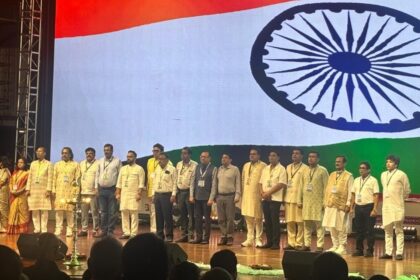
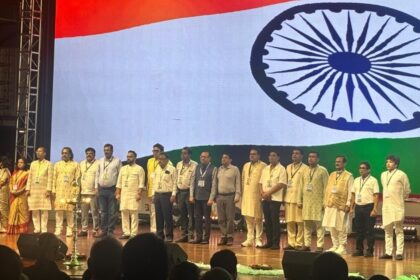
    New Delhi [India], April 03: The 61st session of the United Nations Human Rights Council (UNHRC), held in Geneva from 23 February to 31 March 2026, took place against a backdrop of escalating global tensions, ongoing armed conflicts, and widening inequalities that continue to strain the international human rights framework. The session brought together representatives from over 100 countries, multilateral organizations, and civil society actors to deliberate on emerging and persistent human rights challenges.

    This session was marked by a strong emphasis on the intersectionality of human rights with contemporary global issues. Key thematic priorities included disability rights, children’s rights, minority protection and the integration of human rights into peacebuilding and sustainable development frameworks. Discussions also explored the implications of digital technologies, particularly in safeguarding rights and addressing harmful practices, alongside deliberations on financing sustainable development aligned with economic, social, and cultural rights. Environmental human rights emerged as a central pillar, with growing recognition of the right to a clean, healthy, and sustainable environment. Dialogues underlined the need for stronger governance mechanisms, climate action, and community-led conservation approaches. Simultaneously, the session reflected broader geopolitical concerns, including democratic backsliding, shrinking civic space, and the challenges to international law in a fragmented global order.

    Integrated interventions
    Within this evolving global context, the India Water Foundation (IWF) was given the opportunity to represent its perspectives across five thematic interventions, reflecting a coherent and interwoven approach to rights-based governance. Articulating this perspective, Dr. Arvind Kumar, President, India Water Foundation, brought attention to the evolving dimensions of rights in the digital era, emphasizing privacy as a fundamental right and highlighting India’s legislative progress through the Digital Personal Data Protection Act. He underscored the importance of accountability, lawful data processing, and institutional oversight in building a trusted digital ecosystem that balances innovation and economic growth with the protection of individual dignity.

    Dr. Kumar further situated these perspectives within the broader framework of inclusion and equity, addressing minority issues through a multi-dimensional lens rooted in constitutional guarantees of equality, non-discrimination, and cultural freedom. By emphasizing targeted interventions in education, skill development, and financial inclusion, he reinforced the importance of addressing structural inequalities while promoting social cohesion and participatory governance. Across these contributions, a consistent narrative emerged one that recognizes human rights as an interconnected ecosystem where democratic participation, environmental stewardship, cultural continuity, digital accountability, and social justice are mutually reinforcing rather than discrete domains.

    Complementing this, Ms. Shweta Tyagi, Chief Functionary, India Water Foundation, emphasized the importance of inclusive democratic participation, particularly for persons with disabilities, situating accessibility and dignity as essential to political rights. Drawing on India’s legislative framework under the Rights of Persons with Disabilities Act, 2016, she highlighted how measures such as accessible voter registration, Braille-enabled voting systems, and home voting provisions exemplify efforts to operationalize equality within democratic processes. This focus on inclusion extended seamlessly into her articulation of cultural and environmental rights, where she underscored the intrinsic link between nature and cultural identity, reflected in traditional knowledge systems, sacred landscapes, and community-led conservation practices supported by the Forest Rights Act and global commitments under the Convention on Biological Diversity.

    Reinforcing the interconnectedness of these themes, Ms. Tyagi further highlighted environmental governance as integral to the realization of fundamental rights, particularly in the context of clean air and public health. She pointed to India’s science-based and multi-pronged approach to addressing air pollution through initiatives such as the National Clean Air Programme, alongside the expansion of renewable energy and cleaner technologies, demonstrating how environmental sustainability, economic development, and social well-being must advance in tandem.

    Conclusion
    With the overarching direction of the UNHRC, particularly at a time when the global human rights framework is under visible strain due to ongoing conflicts, geopolitical fragmentation, and weakening multilateral consensus, the session underscored the urgency for constructive and solution-oriented engagement. In this challenging context, India Water Foundation effectively represented India’s continued commitment to inclusive, rights-based, and sustainable development approaches, bringing forward national experiences as part of a broader global dialogue. Its interventions reinforced the importance of balancing development with human dignity, environmental stewardship, and digital accountability, thereby contributing to a more integrated and forward-looking discourse.

    https://youtu.be/nm4E3z816Gw

    https://youtu.be/45UG2ASxuhQ

    https://youtu.be/_9XMOb2D0Kk

    https://youtu.be/yH_A3wmxXYg

    https://youtu.be/awd1AgSN-74

    If you object to the content of this press release, please notify us at pr.error.rectification@gmail.com. We will respond and rectify the situation within 24 hours.

  • India’s First Global Cake Awards, IICMA 2026, Returns to New Delhi, Strengthening India’s Global Presence in Cake Artistry

    India’s First Global Cake Awards, IICMA 2026, Returns to New Delhi, Strengthening India’s Global Presence in Cake Artistry

    New Delhi [India], April 03: The India & International Cake Magazine Awards (IICMA) has announced its second edition, scheduled to take place on April 11 at Bel-La Monde Hotel, NH8, New Delhi. The platform will bring together leading cake artists, international judges, and industry professionals from across India and around the world, continuing its position as India’s first global cake awards initiative that places home bakers, independent creators, and internationally recognised artists on a shared stage.

    Conceptualised by internationally acclaimed cake artist Tina Scott Parashar, IICMA was launched in 2025 with the objective of bridging the gap between Indian talent and global industry standards. The inaugural edition set a strong benchmark in terms of scale, participation, and credibility, with a structured format that prioritised fairness, transparency, and merit-based recognition.

    Over time, the platform has evolved into an important space for a rapidly expanding community of home bakers, small businesses, and professional cake artists who often operate without access to larger industry networks. By combining international exposure with a credible evaluation process, IICMA enables participants to showcase their work alongside global peers while building visibility and professional opportunities.

    The 2026 edition will feature a wide range of categories across cake artistry, wedding cakes, sugar art, and emerging segments within the industry. The event will bring together a distinguished panel of international guests and expert judges, including David Close (UK), Kelly Jane (UK), Alena Ujshag (Ukraine), Mariya Ozturk (Turkey), Lucie Charvatova (Czech Republic), Edna and Vanik of Enamor Cake (Armenia/Iran) and Larysa Rybchuk (Ukraine). Designed as a large-format live experience, the awards aim to create a strong visual and community-led environment, bringing together participants, judges, and industry stakeholders.

    Speaking about the upcoming edition, Tina Scott Parashar, Founder and Editor of India & International Cake Magazine, said, “IICMA was created with a clear vision to build a platform in India that reflects global industry standards while remaining accessible to artists at every level. There is a large and talented community of bakers and cake artists in India, many of whom run independent or home-based businesses. What they often lack is visibility and access, and this platform is designed to address that.”

    The India & International Cake Magazine Awards continues to position itself as a credible and inclusive platform that recognises excellence based on merit while strengthening connections between Indian and international cake artists.

    India & International Cake Magazine is a global platform dedicated to showcasing cake artists and edible art from India and around the world. Through its growing community and initiatives, it aims to promote talent, encourage skill development, and build meaningful connections within the global cake industry.

  • The Real Story Behind Sarkar Palmistry’s Rise In Mumbai

    The Real Story Behind Sarkar Palmistry’s Rise In Mumbai

    New Delhi [India], April 02: Sarkar Palmistry is No.1 Palmist in Mumbai and one of India’s most trusted palmistry experts. Today, more than 437k people across YouTube, Facebook and Instagram follow him. Thousands regularly seek his guidance for their life decisions, marriage or finance related queries. His journey to become a Palmist was bit unconventional. His journey started when he was just a 20 year old boy living a simple life in Mumbai. But one day, his neighbour made a strange prediction. That neighbour knew the art of palmistry. He predicted that before turning 20.5, blood would come out of his body. It can be either due to an accident or an operation. For six months, he lived with fear but stayed careful. One night, he was switching on the old black push-button light. An electric shock hit him, and he fell on a heavy iron cot. Six stitches marked his face. The boy had to rush back to Mumbai. That incident planted a strong question in his mind. The question was, “Can I learn this science?”

    His neighbour refused to teach him, no matter how much he requested. Three years later, he realised he needed true basics. Those were the days when local railway stations had book stalls. Palmistry books were easy to find on those stalls. He bought books by well-known writers like Cheiro. He started studying by himself. But when he tried reading palms, nothing matched. He could understand nature of people. But major events never came right. Meanwhile, the neighbour shifted to a new house and disappeared. That emptiness pushed him harder to decide that he must learn palmistry properly.

    He started doing his own research. Books spoke a lot about “money triangles.” But when he was having practical knowledge even many poor people had them. So he began observing wealthy people in his family friends and community elders. He discovered something common in all wealthy people’s hand. On their Sun Mount, he noticed a fish-like sign again and again. That became his clue. He then wanted to understand poverty. So, he met people outside temples. He listened to their stories, and studied their palms. He noticed two types of hands. Those with wheat-coloured hands always found shelter at night. While those with greyish palms often slept on the road. Slowly, he connected habits, past struggles, and palm patterns. This became his real foundation.

    During this learning phase, he also worked in his family business. Once he had severe back pain. The doctor ordered ten days of rest. This forced pause changed everything. For seven days straight, YouTube kept showing him palmistry videos. But he felt that most creators only repeated book knowledge. Very few had real experience. This made him think another question. Now the question was, “Should I try making my own channel?” His son helped him set it up. The name “Sarkar Palmistry” came from his love for Amitabh Bachchan’s film Sarkar. He did not even know Bengal had a rich palmistry tradition. He recorded his first videos with a simple screen-recording app someone suggested. And slowly, people started watching.

    Viewers began sending their palm photos through email. He wrote long responses for free. This took a lot of time. His family complained about wastage of time and efforts. So, one day in frustration he asked one person for his consulting fees. To his surprise, the person paid the asked money immediately. Soon, he slowed down his old business. He focused fully on palmistry which was his real passion. Today, he reads palms with accuracy about age-wise problems. He can tell growth times, financial rise, even turnover possibilities accurately. According to him, only 5% is human effort and 95% is divine guidance. He often shares about the various clients he has helped on social media.

    Once, he read the palm of a Chief Minister who had previously lost his seat. After examining his palm lines, he predicted that the person would become Chief Minister again and also mentioned the specific time period. Within a span of six months of that period, he indeed became a minister again. Another minister came to him regarding financial matters. The person was not a big leader but only a local one at that time. After reading his palm, he predicted that he would become an MP, and that also came true. When he was informed of this prediction, the person laughed and said that he could believe becoming an MLA, but becoming an MP was too big to believe. However, within six months, he directly became an MP.

    Another client was a businessman whose fate, according to his palm, was to improve after the age of 36. He also observed that the man’s wife had a Rajyog sign, and the husband was benefiting from his wife’s luck as shown in the palm lines. Another client, who was the CEO of a well-known company, had a brown mark on his hand and a triangle at the Saturn mount. From this, he understood and asked the person whether he was interested in black magic. The person accepted that although he had never practiced it on anyone, he was interested in learning it and was actually studying it.

    His belief is simple that every challenge and every rise is written on our hands. And that belief helped him build the name that thousands now know as Sarkar Palmistry.

    If you object to the content of this press release, please notify us at pr.error.rectification@gmail.com. We will respond and rectify the situation within 24 hours.

  • Ekta Kapoor Says ‘New Stars Are Depressed’ on Mohsin Khan’s MK Talks Podcast

    Ekta Kapoor Says ‘New Stars Are Depressed’ on Mohsin Khan’s MK Talks Podcast

    New Delhi [India], April 02: The latest episode of MK Talks, hosted by Mohsin Khan, is making headlines for one bold and controversial statement by Ekta Kapoor — “new stars are depressed.” The remark, delivered candidly during the conversation, sets the tone for an episode that challenges the popular perception of today’s entertainment industry.

    Ekta Kapoor pointed to a major cultural shift behind this claim. According to her, the new generation of actors has moved away from the once-vibrant social life of Bollywood. With fewer parties, almost no alcohol culture, and an intense focus on fitness, discipline, and yoga, she suggested that young stars are living more restricted and isolated lives — which may be contributing to emotional pressure and burnout.

    Mohsin Khan, steering the conversation, briefly touched upon her iconic Kyunki Saas Bhi Kabhi Bahu Thi, where Ekta reflected on how success earlier came with shared celebration, unlike today’s quieter, more internalized journeys.

    While the episode also covers her instinct for talent, evolving storytelling, and quick insights into projects like The Dirty Picture and Bhoot Bangla, the core takeaway remains her unfiltered observation about the mental and emotional state of new-age stars.

    Honest and reflective, this episode of MK Talks shifts the focus from glamour to the quiet intensity shaping the lives of today’s stars.

    You can watch all of this on MK Talks hosted by Mohsin Khan here:(SGP)

  • Sanjay Gondaliya Wins Excellence in Generative AI: QuantumBot Is Not Just Competing, It’s Leading

    Sanjay Gondaliya Wins Excellence in Generative AI: QuantumBot Is Not Just Competing, It’s Leading

    New Delhi [India], April 02: In a defining moment for India’s AI revolution, Sanjay Gondaliya, Founder & Group CEO of QuantumBot, has been awarded the prestigious “Excellence in Generative AI” at the ET Now Business Conclave & Awards 2026.

    Presented by Rohit Chadda, President & COO of Times Network, this recognition goes beyond innovation—it signals who is actually shaping the future of AI.

    This Isn’t Another AI Story

    While most companies are still experimenting with AI…

    QuantumBot is already delivering results at scale.

    This award wasn’t won for ideas.
     It was won for execution, impact, and category leadership.

    At one of India’s most influential platforms—where top policymakers and industry leaders converge—only companies that move the needle get recognized.

    QuantumBot didn’t follow the AI wave.
     It is helping define it.

    What Makes QuantumBot Different?

    Under Sanjay Gondaliya’s leadership, QuantumBot is building what most companies are still trying to understand:

    • AI that directly drives revenue, not just reports
    • Automation that replaces inefficiency with precision at scale
    • Healthcare AI that impacts real human outcomes
    • Enterprise platforms designed to scale globally, not locally

    This is not hype.
     This is applied, scalable, business-first AI.

     From India to Global AI Leadership

    The ET Now Conclave is known for recognizing companies that don’t just grow—
     they reshape industries.

    And this win sends a clear message:

    India is no longer catching up in AI
    Companies like QuantumBot are leading from the front

    This is how global tech leadership begins—
     not in theory, but in execution.

    The Vision Driving This Rise

    At the core of QuantumBot’s momentum is a bold, focused vision:

    • Build globally competitive AI products
    • Position India as a powerhouse in generative AI
    • Create systems that power the next generation of businesses

    And most importantly:
     Make AI deliver measurable outcomes—not just promises.

    Bigger Than an Award

    This recognition is not just about one company.

    It reflects a larger shift—
     India’s deep-tech ecosystem is accelerating, and AI is at the center of it.

    Companies that can combine:

    • Innovation
    • Execution
    • Real-world impact

    …will define the next decade.

    QuantumBot is already there.

    Final Thought

    Winning “Excellence in Generative AI” is a milestone.

    But the bigger story?

    QuantumBot is not just part of the AI revolution
     It’s building what the future of AI actually looks like

    And this is just the beginning.