
Tag: Lifestyle

  • Varsha Usgaonkar Starrer ‘Kaun Sahi’ Trailer Unveiled Amid Strong Reactions and Powerful Dialogues

    Varsha Usgaonkar Starrer ‘Kaun Sahi’ Trailer Unveiled Amid Strong Reactions and Powerful Dialogues

    Mumbai (Maharashtra) [India], April 27: The trailer of Kaun Sahi was launched at a well-attended event in Mumbai, drawing attention for its bold subject and layered storytelling. Presented by Vinayaka Films & Television in association with AAA Studios, the film steps into one of the most sensitive and widely discussed chapters of Indian history, sparking immediate conversations among attendees.

    Set around the ideological divide between Mahatma Gandhi and Nathuram Godse, Kaun Sahi explores contrasting beliefs, moral dilemmas, and the weight of historical interpretation. The narrative is driven by intense exchanges and human perspectives, encouraging viewers to engage with the subject rather than offering a simplified conclusion.

    Produced by Dr. Pawan Todi and directed by Manoj Singh, the film is written by Anuj Kumar and co-produced by Amit Singharaj. With cinematography by Dharmendra Biswas, music by Dilip Sen, and editing by Nitesh Tank, the project is backed by a strong technical team, shaping a gripping and immersive cinematic experience.

    The film features an ensemble cast including Varsha Usgaonkar, Raj Premi, Amit Riyaan, Dr. Pawan Todi, Vijay Aidasani, Lalitesh Jha, Kundan Kumar, Dharmendra Gupta, Aarti Sharma, Madan Kabir, Shantosh Pandit, and Acchey Miyan, each contributing to the film’s multi-layered narratives

    Adding to the intrigue, the film revisits a moment that changed the course of history:

    The story India never heard.

    The debate that never ended.

    Gandhi vs Godse | Non-violence vs Resistance | Truth vs History

    30th January 1948 — One bullet changed everything.

    But who was right?

    With its bold premise and layered storytelling, Kaun Sahi positions itself as one of the most controversial and conversation-starting films of 2026, inviting audiences to reflect and decide for themselves.

    Watch the most controversial trailer of 2026 and decide for yourself.

    Releasing Soon in Theatres!

    If you object to the content of this press release, please notify us at pr.error.rectification@gmail.com. We will respond and rectify the situation within 24 hours.

  • Jaipur Sets a Unique World Record: 220+ Joint Replacement Patients Perform Tadasana Together

    Jaipur Sets a Unique World Record: 220+ Joint Replacement Patients Perform Tadasana Together

    Record created at “Dr. Dubay Golden Warrior Walk”

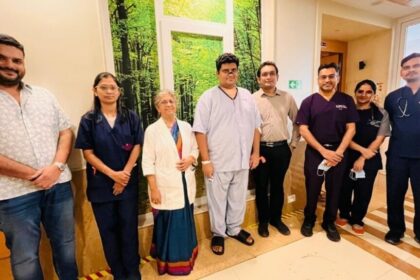
    Jaipur (Rajasthan) [India], April 27: The Pink City has once again proven its excellence in the field of healthcare and medicine. During the “Dr. Dubay Golden Warrior Walk” held in the capital, an extraordinary and inspiring moment that captured global attention. More than 220 patients who had undergone knee and hip joint replacement surgeries performed the Tadasana yoga posture together, setting a new world record. This remarkable achievement has been officially recorded in the Golden Book of World Records. Before this, Dr. Dheeraj also set a world record for performing the highest number of joint replacement surgeries in a single day.

    A Unique Initiative to Break Myths

    The event was organized by director of joints replacement & robotic surgery Dr. Dheeraj Dubay at Shalby Hospital, Jaipur. The primary aim of this walk and yoga session was to eliminate the fear and misconceptions among people who suffer from joint pain but hesitate to undergo surgery due to widespread myths.

    Speaking at the event, Dr. Dheeraj Dubay said:

    “There is a common misconception in society that after joint replacement, a person cannot lead a normal life or perform activities like yoga. Today, these 220 ‘warriors’ have proven that not only can you walk after surgery, but you can also stay completely fit and perform challenging yoga postures.”

    A Blend of Courage and Enthusiasm

    Participants in the Warrior Walk ranged in age from 50 to 85 years. When all of them raised their hands and stood on their toes together to perform Tadasana, the audience and representatives of the record organization were left astonished. The faces of the patients reflected confidence and joy instead of pain. After confirming the record, officials from the Golden Book of World Records presented a certificate to Dr. Dubay and his team.

    Don’t Live in Pain – Embrace Modern Medicine

    Dr. Dubay emphasized that many people continue to live with pain due to fear that surgery might leave them bedridden. Through the “Golden Warrior Walk,” the message was clear: with modern techniques and proper rehabilitation, patients can return to their daily routine within just a few days after surgery.

    This event has not only set a record but also ignited hope for millions suffering from chronic joint pain who have lost their active lifestyle. Jaipur’s “Golden Record” has now become a new benchmark of courage and recovery in the medical world.

    Notably, Dr. Dheeraj Dubay has performed more than 40,000 joint replacement surgeries over his 20-year career. With his advanced “Zero Technique,” surgeries can be completed in just 20 minutes, and patients are often able to start walking within a few hours.

    If you object to the content of this press release, please notify us at pr.error.rectification@gmail.com. We will respond and rectify the situation within 24 hours.

  • How to Say What You Mean: Communication Masterclass

    How to Say What You Mean: Communication Masterclass

    Stop overthinking conversations

    New Delhi [India], April 25: We often talk about improving our communication. Not because it’s cool to talk about. We do it because there’s always that moment.

    You’re about to say something. You know what you want to say. Then you adjust it. Then refine it. Then hold it back for a second too long. By the time you say it, the discussion has proceeded to another point.

    The thought was just fine.

    The delay ruined it.

    Thinking too much doesn’t improve communication. It interrupts it. It creates a barrier between you and the present moment, and it’s not a required barrier. Most conversations don’t require precision. They need presence.

    That’s where things start to change.

    It’s not that people don’t have things to say. It’s that they don’t listen to themselves. So they edit on the fly. They attempt to make it better than it is. And in the process, they lose rhythm, inflection and sometimes meaning.

    It’s easy to hear when they do it. Sentences that begin firm and then fade. Words that dance around. It sounds careful. It doesn’t always sound assured.

    Conversational confidence doesn’t come from precise wording. It comes from continuity. Speaking, and continuing without editing.

    That requires a different kind of focus.

    Not inward. Outward.

    If you are focusing on yourself, your voice, how you are coming across, the conversation will slow down. You are juggling two tasks (talking and assessing). That split creates hesitation.

    When you focus outward, it gets easier. You listen more closely. You react to what they are saying, not what they expect. The pressure is off because you aren’t performing. You’re participating.

    It may be small, but it affects the flow of conversations.

    And there is a point when perfection is bad.

    Most words aren’t spoken to be perfect. It’s meant to be understood. Those are different standards. The second is often interfered with by attempting to achieve the first.

    So good communicators tend to be less demanding.

    Not careless. Just sufficient.

    They communicate what they need to in the moment. They don’t wait to optimise it. They believe imperfections won’t get in the way.

    And they’re usually right.

    It’s better to be right than perfect. A less-than-perfect sentence said at the right time is more valuable than a perfect sentence said too late.

    That’s where the uncertainty comes in.

    Sometimes there’s a delay between the idea and its delivery. The longer the delay, the more distortion. Doubt, self-editing, over-editing. Ultimately, the thought mutates or dies.

    Closing the gap makes a difference.

    You don’t stop thinking. You just eliminate the time spent asking yourself if it is “good enough” to say.

    Most of the time, it is.

    Silence is important, but not for the reasons you might think.

    It isn’t something to be feared. It’s something to use.

    Overthinkers can feel compelled to fill the air with words, or elaborate on things. It seems to be sustaining dialogue. It usually does the opposite.

    A brief pause does more. It helps organize your speech. It shows you’re not searching for the right word. It allows you to breathe.

    That space matters.

    There’s also a physical dimension to this that’s often overlooked.

    Standing, breathing, eye contact – all these things matter. They impact your speaking experience. If you are physically tense, you are mentally tense. If your breathing is ragged, your sentences are short or fragment.

    steadiness in the body equals steadiness in the voice.

    Not perfectly. But enough to notice.

    And repetition.

    The majority of people assume they will be able to deal with high-stakes conversations without practising low-stakes ones. That rarely works. Talking is situational, but speaking is not.

    Fostering the skill of speaking without thinking is done through micro-interactions, micro-conversations. They create less pressure from the sentences because they don’t feel so important.

    And that’s when speaking becomes easier.

    Not because it’s perfected, but because it’s no longer assumed to be in need of improvement.

    Ultimately, effective communication is not about saying what you should.

    It comes from not getting in the way of saying it.

    And once that stops, most of the problems you were trying to correct, correct themselves.

    PNN Lifestyle

  • The Art of Effective Communication: how to be understood

    The Art of Effective Communication: how to be understood

    New Delhi [India], April 25: We’ve always thought of communication as something that can be learned. Speak better. Listen more. Choose the right words. The idea is that quality comes from practice – the more you polish, the more you clarify.

    It works.

    Until it doesn’t.

    Because most communication doesn’t break down at the level of language. It fails before it gets to the level of the sentence. It’s not the words. It’s alignment – between the message you want to send, the message you send, and what the other person can receive.

    This gap has widened recently. Work has accelerated. Dialogues are conducted electronically, often anonymously. Communications are more succinct, responses more immediate, attention spans shorter. It doesn’t allow for lengthy explanations. It requires brevity.

    This alters people’s speech.

    This should make for more efficient communication. But it can make it disjointed. They react before they think. They talk to finish, not to explain. And gradually, it becomes a habit – more words, less meaning.

    This is where the notion of “effective communication” begins to change.

    It’s not about being wellspoken. It’s about removing barriers. Making it easier for someone else to understand your thinking. That sounds simple. It isn’t.

    Because clarity requires decisions.

    What to include. What to leave out. Where to stop.

    Most people struggle with that. Not for a lack of ideas, but because they don’t believe less is enough. So they provide more context, more explanation, more justification. The message gets longer, but not clearer.

    And then there’s the other side.

    Listening.

    We talk of listening as being a passive skill – listen, don’t talk. But there is a different kind of activity in listening. It involves interpretation. Separating content from context. Not reacting immediately.

    That’s harder than speaking.

    Particularly in contexts where faster is better. Where silence is thought to be a lack of confidence. So people fill the space. They speak quickly, even if they don’t always have the right words.

    This builds over time. The speed of conversations increases, but comprehension does not.

    This is where we begin to feel communication is inefficient, though it may be frequent.

    The shift isn’t huge. It’s structural.

    Clear communicators do a couple of things, but not in the obvious way. They think before they talk. They pre-plan what they want to say, for even brief exchanges. And they assume less. They assume that the other person will not fill in the blanks.

    That changes how it sounds.

    And it changes how it’s processed.

    Because clarity makes it easier for people to process information. They don’t need to interpret or interpret. They can respond directly.

    That’s how communication is effective, not when it sounds good, but when it is frictionless.

    There’s a trade-off here.

    Clarity is sometimes directness. And directness can be uncomfortable. It takes away the fuzziness that can save relationships. It allows less wiggle room.

    So people soften their language. They add qualifiers. They hedge.

    It feels safer.

    But it also creates doubt.

    Most communication is a balance between clarity and comfort. Too much clarity and it can seem abrupt. Too much comfort and it becomes watered down.

    There’s no simple answer to that. It depends on the context.

    What is constant is that you need intent.

    What’s the purpose of saying it? What is your message? If you don’t know, it’s not clear.

    And this is where it goes wrong.

    Not in delivery. In definition.

    People don’t fail to communicate because they can’t talk. It fails because they haven’t decided what’s important in what they’re saying.

    Once they have, the rest usually follows.

    Not perfectly. But enough.

    And that’s usually all it needs.

    PNN Lifestyle

  • Actress Mishikka Chaurasia Continues Her Birthday Tradition of Spreading Joy

    Actress Mishikka Chaurasia Continues Her Birthday Tradition of Spreading Joy

    Mumbai (Maharashtra) [India], April 25: Carrying forward a tradition she has followed for years, Actress Mishikka Chaurasia once again dedicated her birthday to giving back. Turning 27, she marked the day with acts of kindness, touching lives and spreading smiles across the city.

    Interestingly, Mishikka Chaurasia shares her birthday on 24th April alongside the legend Sachin Tendulkar and actor Varun Dhawan.

    The day began on a spiritual note as Mishikka attended the first aarti at Siddhivinayak Temple – Mumbai at 5:30 AM, seeking blessings for strength and positivity.

    Continuing her annual ritual of service, she spent time at King Edward Memorial Hospital, where she helped serve lunch to over 1000+ people. Adding a personal touch, Mishikka also participated in preparing a sweet dessert in the Akshay Chaitanya NGO kitchen, making the meal even more special.

    She further celebrated the day by distributing gifts to children, encouraging them to engage in fun and creative summer activities, making her birthday memorable for many young smiles.

    Sharing her thoughts, Mishikka Chaurasia said, “This is something I have been doing for years, and it has become a very important part of my birthday. For me, it’s about gratitude and staying connected to people. Celebrating with them, sharing a meal, and seeing those smiles is what truly makes my day special.”

    Through her consistent efforts, Mishikka Chaurasia continues to inspire by showing that true celebration lies in giving, making her birthday not just a personal milestone, but a day of meaningful impact.

    If you object to the content of this press release, please notify us at pr.error.rectification@gmail.com. We will respond and rectify the situation within 24 hours.

  • The Sovereign Traveler: Why India’s Gen Z is Redefining the Solo Trip

    The Sovereign Traveler: Why India’s Gen Z is Redefining the Solo Trip

    New Delhi [India], April 25: For years, solo travel in India meant just two things. You were either the spiritual type heading to the Himalayas for some grand awakening, or you were a heartbroken Bollywood lead, trying to outrun your problems. It was all or nothing—something you did only when life knocked you sideways. If things were fine, why leave on your own?

    But something’s shifting now. Walk into any hostel in Varkala, grab a coffee in Rishikesh, and the mood is different. There’s a 23-year-old coder from Bengaluru, clacking away on their laptop, a marketing manager from Delhi with a one-way ticket in their pocket, an artist from Mumbai sketching by the window. None of them are hunting for lost pieces of themselves. Nobody ran away from a dramatic love story gone wrong.

    They’re just traveling solo because, plain and simple, they need a reset. For Gen Z, it’s not about escape. It’s about making small changes, catching their breath, clearing the noise.

    The Fixed Life Is Over

    It’s just different now. For earlier generations, life came with a ready-made template—secure job, same group of friends, a roadmap laid out with marriage and your own place as milestones. For Gen Z? Those landmarks have faded. Remote jobs, gig work, friendships that exist half online, half in real life. Where you physically are doesn’t matter as much anymore.

    But that kind of freedom brings a lot of uncertainty. When nothing’s solid, it’s easy to feel a little lost. That’s why traveling solo works. There’s no endless group chat negotiations, no waiting around for someone to finally say yes. You decide, book, and just go. With so much out of their control—jobs, climate, the economy—Gen Z grabs onto the few decisions that actually belong to them. What do you eat today? Where do you go next? That’s real agency.

    Control Is the Real Luxury

    Let’s face it—living in India means constantly compromising. You’re bargaining with your parents about your career, roommates about splitting bills, coworkers about deadlines. Traveling with friends just adds more: where to eat, what to do, when to wake up.

    Travel alone, and all of that melts away. Suddenly, you get a break from all the negotiating. Want to sit by the river in Kasol doing nothing? Go for it. Find a museum boring? Walk out after five minutes—no awkward explanations. This kind of solitude is rare here. And for Gen Z, it’s not really about the destination. It’s about finally ditching everyone else’s expectations.

    The Illusion of Disconnection

    People like to say that travel is about unplugging. But Gen Z knows that’s not really the aim. They aren’t trying to disappear—they want to connect, just on their own rules.

    They keep their phones on. The Instagram stories don’t stop. Slack pings sometimes, too. They’re not “failing” at some ideal version of travel—they’re making it safer. Staying connected means they worry less and can wander further. They travel alone, but their friends, family, work—it’s all right there in their pockets. Just enough connection to feel secure, not so much that they feel trapped.

    The Art of Short-Term Socializing

    Traveling solo doesn’t mean feeling lonely. If anything, people who travel alone are often the most open.

    Hostels and homestays now buzz with a different kind of energy. You meet people over shared breakfasts or on a hike, swap stories, then part ways—no pressure to keep it going. It’s simple. It’s honest. The drama and the obligation of endless group chats? Not here. You enjoy a moment together, then just move on. No one’s keeping score.

    Getting Around Safety

    Safety is still a big deal, especially for women. But solo travelers have new tools.

    They trust real-time reviews, pick verified places to stay, share their location, join women-only groups, find safe-certified homestays. Is India completely safe now? No. But Gen Z knows how to handle risk better. The desire to be independent finally wins over the old fears.

    This Is the Plan, Not a Phase

    This isn’t just a trend that Gen Z will drop at thirty. It’s how they’re shaping their lives. Experiences matter more than buying things. Flexibility means more than quick stability.

    Solo trips are like practice runs. It’s where they learn to draw boundaries, not break the bank, be alone yet not lonely. It doesn’t magically fix everything. But in all that chaos, it helps—a little pocket of clarity where every move is up to them.

    Really, that’s the heart of it. Gen Z in India isn’t out there on their own because they’re avoiding people or life. They travel solo because, in a world packed with noise and compromise, it’s the one way they can truly hear themselves—they get to figure out what really matters.

    PNN Lifestyle

  • Three Decades On, 10 Downing Street Remains a Constant in India’s Nightlife Evolution

    Three Decades On, 10 Downing Street Remains a Constant in India’s Nightlife Evolution

    New Delhi [India], April 24: A legacy built over three decades continues to evolve with new markets and formats.

    In an industry where trends change overnight and brands struggle to sustain relevance, 10 Downing Street (popularly known as 10D or TDS) stands as a rare constant, an enduring pioneer that not only introduced pub culture to India but continues to shape it more than three decades later.

    Long before nightlife became a mainstream urban lifestyle, 10 Downing Street conceptualized and executed a format that was both aspirational and accessible. Drawing inspiration from classic British pubs while adapting to Indian sensibilities, 10D created a space where food, music, and social interaction seamlessly came together. This was a first-of-its-kind approach in India at the time, one that laid the foundation for the country’s evolving pub and nightlife ecosystem.

    Today, over 30 years since its inception, 10 Downing Street remains a successful and thriving brand, an achievement that underscores its strong fundamentals, consistent innovation, and deep understanding of consumer behaviour. While many hospitality formats have come and gone, 10D has successfully evolved with the times, staying relevant across generations of patrons.

    Owned by Golden Theme Hotels Pvt. Ltd., the brand has also expanded into a multi-format ecosystem that caters to diverse market needs. Alongside its flagship 10D outlets, the company has introduced complementary verticals such as Trick, a contemporary concept aimed at younger audiences; 10D Express, a more scalable and accessible extension of the brand; and 10D Outdoor, a professional catering arm that delivers curated experiences beyond physical outlets.

    At its core, 10 Downing Street is more than just a pub, it is a high-energy social destination. The brand’s DNA lies in its ability to create immersive experiences, from curated DJ nights and live music performances to themed events that resonate with local audiences. This experiential focus, combined with a strong and diverse food and beverage program, has been instrumental in building lasting customer loyalty.

    Pranay Reddy, Managing Director of Golden theme Hotels Pvt. Ltd. shared insights on the brand’s journey and future outlook:

    “At 10 Downing Street, our vision has always been about creating experiences that bring people together. Being one of the first to introduce pub culture in India gave us a strong foundation, but what has truly sustained us for over three decades is our ability to continuously evolved, innovate, and stay deeply connected with our audience. As we expand, our commitment remains unwavering -to deliver consistent, high-quality experiences across every market we enter.”

    Continuing its expansion journey, 10 Downing Street is set to launch its 13th outlet in Bhilai in May 2026. This marks a significant milestone as the brand enters a Tier 3 city, reflecting a strategic shift towards tapping into emerging markets where demand for premium dining and nightlife experiences is rapidly growing. The Bhilai launch is not just about geographical expansion, it represents the brand’s confidence in the evolving aspirations of consumers beyond metro cities.

    The move into smaller cities aligns with a broader vision to democratize premium hospitality experiences, making them accessible across diverse city tiers. With increasing disposable incomes and changing lifestyle preferences, smaller cities are becoming key growth drivers for the hospitality sector and 10D is positioning itself at the forefront of this shift.

    A major pillar of this expansion strategy is the brand’s franchise-led model, which enables scalable growth while maintaining consistency in quality and experience. By collaborating with local partners who bring market-specific insights, 10D ensures that each outlet is both locally relevant and aligned with its core brand ethos.

    Looking ahead, 10 Downing Street has outlined a robust growth roadmap, with plans to launch six new outlets by 2027. This expansion will further strengthen its presence across India while also paving the way for potential international markets in the future.

    In a competitive landscape where longevity is rare, 10 Downing Street’s journey is a testament to the power of vision, adaptability, and brand equity. From pioneering pub culture in India to building a multi-city presence and now expanding into Tier 3 markets, 10D continues to evolve without losing sight of its roots.

    As the brand steps into its next phase of growth, it remains committed to what it has always done best, which is creating vibrant, memorable experiences that bring people together. With the Bhilai launch and an aggressive expansion plan ahead, 10 Downing Street is not just revisiting its legacy; it is actively shaping the future of India’s hospitality and nightlife industry.

    Followus: https://www.instagram.com/10downingstreet_india?igsh=cXp0cDVwMjV0czY4

    For more information, please visit www.10ds.in

    If you object to the content of this press release, please notify us at pr.error.rectification@gmail.com. We will respond and rectify the situation within 24 hours.