Tag: Lifestyle

  • India’s Blood Sugar Problem Is No Longer Only About Diabetes

    India’s Blood Sugar Problem Is No Longer Only About Diabetes

    A growing number of young urban Indians are experiencing unstable energy, stress-driven eating, and metabolic imbalance long before any clinical diagnosis.

    New Delhi [India], June 03: For many working professionals in Indian cities, fatigue no longer arrives only at the end of a long week. It arrives during an ordinary Tuesday afternoon.

    The inability to focus after lunch. The pull toward caffeine by 4 PM. Irritability between meals. Late-night cravings after mentally exhausting days. The quiet confusion of eating reasonably well but still feeling internally out of rhythm.

    These experiences have become so common they are treated as normal. But wellness researchers and practitioners are beginning to ask whether normalising them is actually the problem.

    Beyond diagnosis

    For years, conversations about blood sugar were almost entirely clinical. Older adults. Family history. Fasting glucose numbers. Diabetes management.

    That framing is shifting.

    A younger demographic, professionals in their late twenties and thirties, is increasingly reporting energy instability, poor sleep recovery, sugar cravings, and a general sense of running on borrowed energy without ever crossing a clinical threshold. No diagnosis. No alarm. Just a persistent feeling of imbalance.

    Public health researchers have noted a rise in what is sometimes called pre-metabolic dysfunction: a state where the body’s capacity to regulate energy, digestion, and stress response is quietly degrading before any formal condition develops. This is the gap between feeling fine and actually being well.

    The lifestyle the body was not designed for

    Modern urban work culture places the body under a form of continuous metabolic stress that rarely gets named directly.

    Skipped breakfasts. Meals eaten while multitasking. Long sedentary hours followed by mental stimulation deep into the night. Sleep that does not restore. A wellness culture that measures health through output rather than recovery.

    The result is not always illness. More often it is a body that keeps adapting until it cannot adapt quietly anymore.

    Classical Ayurveda framed this through the concept of Agni, the body’s metabolic and digestive capacity. In classical texts, Agni is not limited to digestion of food alone. It governs how the body processes stress, environmental load, irregular routine, and emotional experience. When Agni is consistently disrupted through irregular eating, poor sleep, and chronic stress, the body’s capacity to metabolise energy efficiently deteriorates. The person is not sick. But they are not recovering either.

    This framework, developed centuries before glucose monitors existed, describes something that modern metabolic research is increasingly mapping with data.

    The turn away from aggressive wellness

    The dominant response to burnout and fatigue in urban wellness culture has been intensity. Aggressive detoxes. Elimination diets. High-output fitness routines. Fasting protocols marketed as transformation.

    Many people who have tried these approaches report a pattern: short-term improvement followed by return to baseline, or worse, increased fatigue and food preoccupation.

    A quieter shift is underway. Consumers are moving away from punishment-based health interventions toward approaches that feel more sustainable. The interest is no longer only in dramatic results. It is in consistent function. Steady energy. Digestion that works. Sleep that restores.

    Traditional Ayurvedic wellness systems are seeing renewed interest in this context, not because they are ancient, but because they are structurally oriented toward balance and rhythm rather than intensity.

    Formulations built for metabolic rhythm

    Some Indian brands are approaching this space through classical Ayurvedic formulation rather than modern supplement logic.

    JeevRasa, an Ayurvedic wellness brand, has developed Madhunaśa for metabolic support, drawing on herbs with documented traditional use in managing metabolic rhythm, including Vijaysar, referenced in Ayurvedic texts under the framework of Prameha, the classical category that includes imbalances of metabolism and glucose regulation. The formulation follows classical preparation standards and is positioned as long-term lifestyle support rather than a rapid intervention.

    The brand’s broader approach reflects the same philosophical shift visible across wellness culture: away from quick transformation and toward consistent support for the body’s natural regulatory capacity.

    The larger question

    The conversation around metabolic health in urban India is expanding because the experience it describes is expanding. More people feel it. Fewer are willing to simply accept it as a side effect of a busy life.

    That shift in expectation is significant. When people stop normalizing chronic fatigue and energy instability as just how modern life feels, they start asking better questions.

    Not just how to manage symptoms. But how to restore the conditions the body needs to regulate itself.

    That is a different question. And it is one that wellness culture, both modern and traditional, is only beginning to answer seriously.

    About JeevRasa

    JeevRasa is a classical Ayurvedic wellness brand based in Noida, India. Its formulations are prepared using traditional Ayurvedic methods and manufactured through a classical Ayurvedic pharmacy. The brand’s range includes formulations for metabolic support, detoxification, and immunity, sourced from forest herb regions and formulated without fillers or synthetic additives – jeevrasa.com.

    If you object to the content of this press release, please notify us at pr.error.rectification@gmail.com. We will respond and rectify the situation within 24 hours.

  • Founder Aman Khan Marks End of Delhi Nightclub KNOT With Cinematic Film Announces Four-City Comeback Across Goa, Pune, Mumbai, and Bangalore

    Founder Aman Khan Marks End of Delhi Nightclub KNOT With Cinematic Film Announces Four-City Comeback Across Goa, Pune, Mumbai, and Bangalore

    New Delhi [India], June 3: Indian entrepreneur Aman Khan, founder of Delhi nightclub KNOT, has announced the release of a cinematic short film titled “The Chapter Ending” and a four-city luxury hospitality comeback built around two brands: KNOT Noir and Millionaire Mansion.

    The announcement marks the formal close of KNOT’s original Delhi chapter at Eros Hotel, Nehru Place, while setting out Khan’s next phase across Goa, Pune, Mumbai and Bangalore by 2030. The Delhi market, he says, is not being abandoned. It is being paused until the new portfolio is strong enough for a return on firmer terms.

    The film, produced by Third Eye Productions, is now planned for release across Aman Khan’s official Instagram presence and the KNOT Delhi page. It is designed as a cinematic closing statement rather than a conventional nightclub aftermovie. The story follows a five-part emotional arc: rise, pressure, forced closure, loss and rebirth.

    KNOT opened in 2022, when Khan was twenty years old. He entered Delhi’s established nightlife market without a traditional industry background, family backing in hospitality, or an existing circuit of power. By the founder’s account, the club became profitable early and quickly built a reputation for a premium audience, music-led programming, luxury energy, and a visual identity associated with the line “Welcome to the shadows.”

    For guests, KNOT was a venue built around celebration. For Khan, it became proof that a young outsider could build a serious nightlife brand in one of India’s most competitive and tightly networked markets.

    Behind the rise, however, the story became more complex. Khan says the pressures of operating a high-volume nightclub arrived alongside difficult personal and business realities. He is also choosing to speak publicly for the first time about navigating bipolar disorder during the years he built and ran KNOT.

    “There were phases where I could not fully show up the way a founder should,” Khan said. “Manic periods, depressive periods, weeks of instability – those moments affected judgment. I brought partners in because the business needed presence and structure. Some decisions helped. Some became part of the problem. I am speaking about it because many founders suffer silently while the outside world only sees growth.

    Khan does not name individuals in the film or in the public release. He describes the closure as the result of a wider sequence of partnership conflict, legal pressure, regulatory scrutiny, and external stress around Delhi’s late-night nightlife environment. According to Khan, a cluster of venues in the same district faced shutdown pressure during the same period, with KNOT remaining closed for roughly eight months while rent, salaries, and operating obligations continued.

    “The hardest part was not only the closure,” Khan said. “It was carrying the weight of a brand that was alive in people’s memory but locked in reality. I kept paying, kept waiting, kept hoping, and then I understood that the chapter needed an ending.”

    That ending is now being framed as the beginning of a larger hospitality plan.

    KNOT Noir, the first new brand in the rollout, is being developed for North Goa. It is positioned as a darker, more cinematic evolution of the original KNOT identity – built for a destination market with deeper experiential potential, stronger design language, and a more immersive brand world.

    Millionaire Mansion, a second luxury nightlife brand under Bile Hospitality, is planned for Pune next year. The concept is being designed for a distinct audience profile, with a separate visual tone and hospitality positioning from KNOT Noir. Mumbai and Bangalore launches are planned to follow before 2030.

     “I am taking a pause from Delhi. I am not leaving it,” Khan said. “After Goa, Pune, Mumbai and Bangalore are built, the market will see me back. The chapter that ended at Eros was not the brand. It was that round.”

    The expansion will sit under Bile Hospitality Pvt. Ltd., while Third Eye Productions will continue to shape the creative storytelling, campaign architecture, and visual identity around the brands. Khan also operates Third Eye Productions as a creative production and brand-building agency and is developing DOZBAE, a luxury streetwear label with global ambitions.

    The public-facing communication around the release will point audiences to amankhan.ai for the founder profile and thirdeyeproductions.in for the production company behind the film. Khan says this structure is deliberate: the story should not live only as a nightclub post, but as part of a broader founder record, connecting hospitality, film, fashion, production, and future city launches under one long-term creative-business ecosystem. That record, he says, matters because memory is part of brand equity too.

    The Chapter Ending film has been created as a Third Eye Productions original asset, with concept, story, and production credited to the agency. The original score is by Priyanshu Verma, with post-production handled by Edition Studio, led by Shobhit Gour. A full-length music video expanding the narrative is expected to follow the short film release.

    The film avoids literal accusation and instead uses cinematic implication to communicate the emotional history of KNOT. The objective, Khan says, is not to reopen old wounds publicly but to give the brand’s first chapter a proper ending before the next one begins.

    “KNOT was never just a club for me,” he said. “It was the first proof that I could build something from nothing. What happened hurt, but it also gave me clarity. The next chapter has to be bigger, cleaner, and more controlled.”

    For the hospitality market, the announcement positions Khan as a young founder attempting to rebuild beyond a single venue and into a multi-city nightlife portfolio before turning thirty. For his audience, the release of the film marks something more personal: the end of a Delhi story that carried ambition, pressure, illness, conflict, loss, and survival in equal measure.

    Khan says the next few years will define whether the pain of KNOT’s closure becomes only a memory or the foundation of a wider national brand.

    “Some chapters do not end because the dream failed,” he said. “They end because the founder has to return stronger.”

    If you object to the content of this press release, please notify us at pr.error.rectification@gmail.com. We will respond and rectify the situation within 24 hours.

  • From Childhood Dream to Reality: Actor Anusheel Chakrabarty Brings Home Rs 1.23 Crore BMW Z4 M40i Pure Impulse Edition

    From Childhood Dream to Reality: Actor Anusheel Chakrabarty Brings Home Rs 1.23 Crore BMW Z4 M40i Pure Impulse Edition

    Mumbai (Maharashtra) [India], June 03: From Childhood Dream to Reality: Actor Anusheel Chakrabarty Brings Home ₹1.23 Crore BMW Z4 M40i Pure Impulse Edition

    Mumbai: Dreams often begin as fleeting childhood fantasies, inspired by movies, iconic characters, and unforgettable moments on screen. For actor Anusheel Chakrabarty, one such dream has now become a reality as he proudly welcomed a brand-new BMW Z4 M40i Pure Impulse Edition, valued at approximately ₹1.23 crore, to his garage.

    However, this isn’t just another celebrity luxury car purchase. For Chakrabarty, the BMW Z4 symbolizes years of aspiration, determination, and the fulfillment of a dream nurtured since childhood.

    Inspired by James Bond and Bollywood Classics

    The actor revealed that his fascination with sports cars began while watching legendary James Bond films and Hrithik Roshan’s blockbuster debut, Kaho Naa… Pyaar Hai. The stylish convertibles, scenic road trips, and glamorous lifestyle showcased on screen left a lasting impression on him during his formative years.

    Today, that very dream sits in his driveway in the form of the stunning BMW Z4 roadster.

    To make the purchase even more special, Chakrabarty secured a VIP registration number, adding a personalized touch and enhancing the exclusivity of his luxury sports car.

    Sanremo Green BMW Z4 Turns Heads

    Finished in the eye-catching Sanremo Green Metallic shade, the BMW Z4 M40i Pure Impulse Edition exudes elegance and performance. The roadster features a low-slung profile, muscular bonnet, aggressive M Sport styling package, and a sleek black soft-top roof.

    The unique color choice perfectly complements the actor’s refined taste and passion for luxury automobiles.

    An Emotional Delivery Celebration in Mumbai

    The handover ceremony at BMW Infinity Cars, Worli, Mumbai, turned into an unforgettable family celebration. Rather than a routine vehicle delivery, the occasion became a deeply emotional milestone for the actor.

    Surrounded by family and close friends, Chakrabarty marked the special day with champagne celebrations, cake cutting, photographs, and heartfelt moments. One of the most touching highlights was sharing the achievement with his mother, Advocate Sheela Chakraborty, who has been an important part of his journey.

    Sources close to the actor shared that he became emotional while reflecting on the years of hard work and perseverance that led to this achievement.

    BMW Infinity Adds a Personal Touch

    Adding to the memorable experience, the BMW Infinity team surprised the actor with a custom-made sketch featuring him alongside his new BMW Z4. The personalized artwork quickly became one of the most talked-about aspects of the delivery ceremony, reflecting the dealership’s thoughtful gesture.

    BMW Z4 M40i Pure Impulse Edition: Performance Meets Luxury

    Beyond its striking appearance, the BMW Z4 M40i Pure Impulse Edition is a true performance machine.

    Powered by BMW’s renowned 3.0-litre inline six-cylinder turbocharged petrol engine, the roadster delivers an impressive:

    • 340 hp power output
    • 500 Nm torque
    • 0-100 km/h acceleration in just 4.5 seconds

    The convertible combines exhilarating performance with everyday luxury, making it one of the most desirable sports cars in India.

    Premium Features Include:

    • Harman Kardon Surround Sound System
    • Ambient Interior Lighting
    • Head-Up Display
    • Wireless Apple CarPlay
    • Electrically Adjustable Memory Seats
    • Fully Digital BMW Cockpit
    • Advanced Driver Assistance Systems
    • Premium Connectivity and Infotainment Features
    • More Than a Luxury Car—A Dream Fulfilled

    While fans and automobile enthusiasts celebrated the actor’s latest luxury acquisition across social media, what truly resonated was the emotional story behind it.

    For Anusheel Chakrabarty, the BMW Z4 is more than a high-performance convertible or a status symbol. It represents a lifelong ambition finally realized—a reminder that childhood dreams can indeed become reality through dedication and persistence.

    In a world often focused on luxury and success, this milestone serves as a powerful reminder that some purchases are not about prestige, but about fulfilling promises made to the younger version of ourselves.

    And that is what makes this BMW Z4 delivery story truly special.

    If you object to the content of this press release, please notify us at pr.error.rectification@gmail.com. We will respond and rectify the situation within 24 hours.


  • Haridwar to Witness Installation of the World’s Second Largest Maha Mrityunjaya Yantra

    Haridwar to Witness Installation of the World’s Second Largest Maha Mrityunjaya Yantra

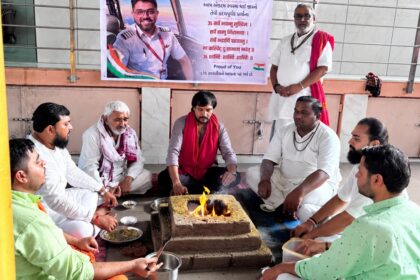
    New Delhi [India], June 2: Devbhoomi Haridwar is set to witness the establishment of a historic spiritual monument that is expected to gain global recognition in the world of Sanatan spirituality and divine architecture.

    A gigantic 52-feet-long, 52-feet-wide, and 52-feet-high Maha Mrityunjaya Yantra, regarded as the world’s second-largest Maha Mrityunjaya Yantra, will soon be installed at Tapovan Greens Society, located at the entrance of Haridwar.

    This grand spiritual project has already generated immense enthusiasm among Shiva devotees, spiritual seekers, and followers from across India and abroad. The first Maha Mrityunjaya Yantra of this scale had previously been established at Maiyad Village in Hisar, Haryana.

    The Maha Mrityunjaya Mantra, dedicated to Lord Shiva, has been revered in the Sanatan tradition as a divine source of healing, protection, longevity, positivity, and spiritual awakening. Inspired by this sacred energy, the upcoming Yantra is envisioned as a powerful center of faith, meditation, spiritual consciousness, and positive vibrations for humanity.

    One of the unique highlights of this monumental installation is its visibility from the National Highway itself. Devotees traveling from both Delhi and Dehradun towards Haridwar will be able to have direct darshan of the divine Maha Mrityunjaya Yantra from the highway, making it a major spiritual attraction and landmark destination.

    Mrityunjaya

    According to organizers, the spiritual journey of this Maha Mrityunjaya Yantra has already captivated public attention at various sacred events and locations. Prior to this, it had been installed in Hisar, Haryana, while a temporary grand structure was also created during the Prayagraj Mahakumbh. However, this will be the first time the Yantra is being established permanently in such a magnificent and large-scale form in Haridwar.

    The presence and blessings of Yogi Shajanand Nath Maharaj during the announcement ceremony added special spiritual significance to the occasion.

    Speaking on the development, Atul Tyagi, Director of Tapovan Greens, expressed pride and gratitude that Yogi Shajanand Nath ji selected this sacred land for the installation of the Maha Mrityunjaya Yantra. He stated that the project would serve as a timeless spiritual inspiration for future generations.

    Senior BJP leader Omkar Jain welcomed Yogi Shajanand Nath during the gathering. Several distinguished personalities from the industrial, business, and social sectors were also present at the event.

    Local residents and spiritual followers believe that this extraordinary project will elevate Haridwar’s religious and cultural identity to new heights and become a major attraction for devotees and tourists visiting from India and around the world.

  • MangoFolks by Konkan Estate Honoured for Leading India’s Urban-to-Agri Movement at the Real Estate Quality Excellence Awards 2026

    MangoFolks by Konkan Estate Honoured for Leading India’s Urban-to-Agri Movement at the Real Estate Quality Excellence Awards 2026

    Mumbai (Maharashtra) [India], June 02: At a time when urban life is increasingly defined by financial pressure, market uncertainty, and an exhausting cycle of constant hustle, MangoFolks by Konkan Estate is building an alternative vision of growth… one that reconnects people with land, long-term value, and a more intentional way of living.

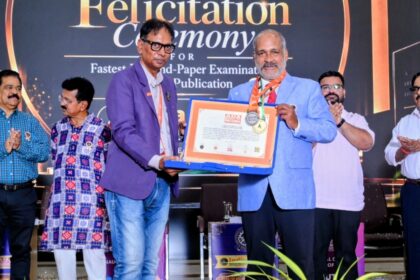
    Recognising this emerging shift, MangoFolks was awarded the “Excellence in Building India’s Urban-to-Agri Movement Award” at the prestigious Real Estate Quality Excellence Awards 2026, held on 7th May at The Westin, Goregaon, Mumbai. Hosted by Adsync Dubai with Times Now as the telecast and media partner, the event celebrated some of the country’s most impactful names across the real estate and infrastructure landscape. Actress Bhagyashree, widely known for Maine Pyar Kiya, attended the ceremony as a celebrity guest.

    The recognition marks a significant milestone for MangoFolks and its founders, Mr. Harsh Rawat and Mr. Ganesh Gokhale, who have steadily built a model that blends managed farmland ownership, sustainable agriculture, and long-term asset creation into a modern lifestyle movement.

    While India witnessed decades of migration from rural regions to cities in search of opportunity, MangoFolks is part of a new and meaningful reversal. It is enabling urban individuals and families to reconnect with rural India, not out of necessity, but by choice.

    Through professionally managed mango orchards in the rapidly developing Tala–Mangaon belt of Konkan, MangoFolks offers urban buyers an opportunity to own productive agricultural land without the burden of day-to-day farm management. From plantation and irrigation to scientific crop maintenance and long-term orchard upkeep, the company manages the operational ecosystem while landowners participate in the value creation.

    However, MangoFolks positions itself as more than a farmland company. Its larger appeal lies in addressing some of the most pressing concerns modern professionals face today.

    For many urban families, financial life has become heavily dependent on a single source of income, making them vulnerable to layoffs, market downturns, and economic uncertainty. Traditional wealth-building avenues continue to face volatility, while rising taxation, debt cycles, and lifestyle inflation make long-term security increasingly difficult to achieve.

    MangoFolks introduces an alternative asset-backed model that combines land ownership with agricultural productivity and future lifestyle potential. The initiative resonates strongly with professionals seeking early retirement planning, diversification beyond volatile financial markets, and an escape from the constant pressure of the corporate rat race.

    Its orchard projects are developed using UHDP (Ultra High-Density Plantation) farming techniques, allowing structured and efficient cultivation with approximately 400 mango trees per acre. Beyond agricultural productivity, every plot also includes dedicated open spaces that create possibilities for future farmhouses, wellness retreats, eco-stays, and agro-tourism experiences.

    Speaking about the recognition, Mr. Ganesh Gokhale, Co-Founder and Director of MangoFolks, said,

    “This award validates a vision that both Harsh and I have believed in from the beginning. People are not just looking for investments anymore; they are looking for stability, meaning, and a healthier way to grow their future. MangoFolks was created to help individuals reconnect with nature while building tangible, long-term assets that can support both financial freedom and quality of life. We believe the future will belong to communities that grow with intention.”

    Over the last few years, MangoFolks has cultivated a growing community of orchard owners from cities including Mumbai, Pune, Delhi, Hyderabad, Kolkata, and Indore. The initiative reflects a larger cultural shift where land ownership is no longer viewed purely as a transaction, but as a pathway toward sustainability, legacy, and balanced living.

    With the Urban-to-Agri movement gaining momentum across India, MangoFolks continues to position itself at the intersection of agriculture, lifestyle, and future-focused asset building, creating a model that speaks to a generation looking beyond conventional definitions of wealth

    Connect with Us

    To know more about MangoFolks, schedule a conversation with our team, or explore orchard ownership opportunities:

    Website: mangofolks.in

    Contact: 7676029090

    Instagram: mangofolks_orchard

    If you object to the content of this press release, please notify us at pr.error.rectification@gmail.com. We will respond and rectify the situation within 24 hours.

  • First-Time Homebuyers: The Price You See Isn’t the Price You Pay

    First-Time Homebuyers: The Price You See Isn’t the Price You Pay

    Kolkata (West Bengal) [India], June 02: Most first-time homebuyers begin their journey with a fixed budget in mind. The initial focus is often on the quoted property price, price per square foot, or attractive launch offers that appear financially manageable at first glance.

    However, across India’s residential market, the actual cost of homeownership often extends well beyond the advertised base price.

    Industry analyses covering residential transactions between 2024 and 2025 indicate that the final acquisition cost of a home can rise between 15% and 30%, and in certain cases even up to 40%, once additional charges and ownership-related costs are included. These findings are reflected across industry studies, including insights from the 99acres Knowledge Centre (January 2026) and multiple independent property transaction analyses.

    As a result, pricing transparency is increasingly becoming one of the most important expectations among first-time homebuyers.

    Understanding the Difference Between Base Price and Total Ownership Cost

    This is not an isolated observation. It is reflected across industry data. Analysis of residential transactions across India between 2024 and 2025 shows that the final acquisition cost of a home typically rises 15% to 30%, and in some cases up to 40%, above the base price, once all components are included (compiled across industry studies, including 99acres Knowledge Centre (January 2026) and independent transaction analyses referenced in property research platforms).

    Transparency Is Becoming a Major Decision-Making Factor

    At the same time, early 2026 market insights identify pricing transparency as a non-negotiable expectation among today’s buyers, particularly those entering the market for the first time.

    What follows are structured additions, statutory charges, location-linked premiums, and project-level inclusions that reshape the final cost. Across most Indian states, this typically includes stamp duty ranging between 5% to 8% of the property value, along with registration charges of around 1%, as per prevailing state regulations. For under-construction properties, GST is applicable at 5% for non-affordable housing, in line with current taxation norms.

    Beyond these, there are project-specific components. Floor rise charges are commonly applied based on level, often ranging between ₹20 to ₹50 per square foot per floor. Preferential Location Charges (PLC) may apply for units with specific advantages such as corner positioning, views, or elevation. Club membership fees, parking charges, maintenance deposits, and legal or documentation costs are also typically part of the overall transaction.

    For first-time homebuyers, this shift is especially important because uncertainty during the purchasing process often affects not only budgets but also confidence and trust in the transaction itself.

    Most financial institutions do not cover many of these additional components within the home loan. Costs such as stamp duty, registration, and certain one-time charges are typically borne through the buyer’s own liquidity at the point of transaction, a detail often realized late in the process.

    As a result, buyers are now asking more detailed questions early in the process:

    • Is parking included in the quoted price?
    • Are floor rise charges already factored in?
    • What will be the total payable amount before possession?
    • Are amenities and maintenance charges included upfront?

    Developers that provide clear and comprehensive cost communication early in the process are increasingly gaining buyer confidence.

    Sugam Homes Focuses on Greater Cost Clarity for Buyers

    This growing emphasis on transparency is reflected in how developers are structuring buyer conversations today. Sugam Homes appears to recognize this shift through a more clarity-driven approach toward pricing communication and financial planning across its residential developments.

    There is a certain clarity in how cost conversations are structured, where pricing is outlined more comprehensively upfront, and the emphasis remains on helping buyers understand the full financial picture early in the process.

    Across developments like Urban Lakes and Prakriti, the approach leans toward transparent cost structures and reduced ambiguity, allowing first-time buyers to plan with accuracy rather than assumption.

    For buyers searching for a flat near Konnagar station, Urban Lakes offers not only a strategically connected residential environment but also a planning approach that prioritizes greater financial transparency and reduced ambiguity during the buying process.

    Similarly, homebuyers exploring a flat near Garia Metro Station through Sugam Prakriti are increasingly looking for residential options that combine accessibility, lifestyle convenience, and clearer ownership planning from the beginning.

    This approach allows first-time buyers to evaluate affordability more accurately and make informed long-term decisions with greater confidence.

    First-Time Homebuying Requires Financial Clarity From Day One

    For most people, purchasing a first home represents far more than a financial transaction. It carries long-term aspirations related to stability, security, and future planning.

    This is why transparency has become such an important aspect of modern homebuying.

    Today’s buyers are increasingly recognizing that the right question is not simply about the advertised cost of a property, but about the complete ownership picture attached to it.

    Understanding what is included, what remains additional, and what financial commitments arise before possession helps buyers avoid unexpected stress later in the process.

    As residential markets continue to evolve, developers that prioritize clarity, upfront communication, and buyer awareness are likely to play a more significant role in shaping trust within the sector.

    If you object to the content of this press release, please notify us at pr.error.rectification@gmail.com. We will respond and rectify the situation within 24 hours.

  • Designing With Intent: How Global Thinking Is Reshaping Indian Homes

    Designing With Intent: How Global Thinking Is Reshaping Indian Homes

    Kolkata (West Bengal) [India], June 02: For a long time, residential real estate followed a clear order: location first, then layout, then everything else. Design came in later, refining what already existed.

    That sequence is changing.

    People are reading spaces differently now. Not in technical language, but in instinct. Why does one home feel open, even at the same size? Why does another feel calmer, more balanced, easier to live in?

    This transformation is not simply aesthetic. It reflects a broader shift in how modern buyers perceive quality living.

    Exposure has expanded. Through travel, digital platforms, and global design culture, buyers today have seen how homes can be shaped, where architecture, landscape, and planning come together as one cohesive experience. And that memory begins to guide decisions.

    “Design is becoming central to modern residential living.”

    Global Design Influence Is Reshaping Buyer Expectations

    Industry research strongly reflects this transition toward design-led residential demand. The Colliers India Real Estate Outlook 2026 identifies premiumisation as a defining structural force in residential demand, where buyers are actively prioritising quality, design, and liveability. Similarly, the Sotheby’s International Realty 2026 Luxury Outlook, drawing on its Global Agent Survey, notes that 60% of affiliated agents globally report that lifestyle and wellness amenities have become more important in homebuying decisions. Closer to home, Knight Frank India (India Real Estate: Office and Residential Market, Q1 2026) highlights that markets like Kolkata are seeing resilient demand even as broader trends fluctuate, indicating a more discerning buyer, not a hesitant one.

    As a result, residential developments today are no longer built around location advantages alone. Increasingly, design itself is becoming a defining differentiator.

    Design-Led Thinking Is Influencing Premium Residential Developments

    At the top end, projects are no longer built around location alone. Developments like DLF The Camellias in Gurgaon and Three Sixty West in Mumbai are shaped around design as the core product architecture, materials, and lifestyle planning work together. In Kolkata, this shift finds expression in projects like Niavara, where design-led thinking begins at the architectural level itself, shaping how space, light, and movement are experienced within a dense urban context. Buyers exploring luxury flats in Kolkata are increasingly prioritising homes where architecture and liveability work together rather than functioning as separate elements.

    Different regions and practices bring different strengths. Architecture defines form and proportion. Planning shapes usability and flow. Landscape determines how spaces are experienced between structures.

    Sugam Homes Is Integrating Global Design Expertise Into Urban Living

    At Sugam, this approach is reflected through carefully chosen collaborations. For Niavara and Urban Lakes, the architectural vision is developed in association with Ricardo Bofill Taller de Arquitectura (RBTA), the Barcelona-based practice known for large-scale master planning and a strong sense of spatial rhythm and form. Their involvement brings a certain structure and discipline to how built spaces are conceived and experienced.

    This is complemented by Sanon & Sen Associates, who serve as consulting architects on projects such as Crown in Salt Lake, where the design approach focuses on balancing contemporary living with environmental sensitivity. Their role becomes critical in ensuring that global design intent is meaningfully adapted to local context, regulatory frameworks, and evolving urban lifestyles.

    For homebuyers searching for a flat in Salt Lake Sector 5, Crown reflects this blend of modern residential planning, strategic connectivity, and design-oriented urban living.

    For landscape, Sugam collaborates with P Landscape, the Bangkok-based design firm, bringing an international perspective to how open spaces are imagined not as residual areas, but as environments that people actively use, move through, and experience.

    Urban Lakes and Niavara Reflect a More Integrated Design Philosophy

    This thinking finds expression in projects like Urban Lakes, where water bodies, open greens, and built spaces are planned in relation to each other, allowing the environment to feel cohesive rather than assembled.

    For buyers looking for a flat near Konnagar station, Urban Lakes offers an environment where open spaces and community planning are thoughtfully integrated with urban accessibility.

    And in Niavara, where vertical living is designed to feel open through three-sided exposure, movement of light, and spatial balance, demonstrating how design can reshape even dense city living.

    As demand for luxury flats in Kolkata continues to evolve, projects like Niavara increasingly reflect the growing importance of architecture-led living experiences within the city’s premium housing segment.

    Design Today Is About Creating Complete Living Experiences

    The role of design in residential real estate has evolved far beyond visual appeal.

    Today, buyers are evaluating how seamlessly architecture, planning, landscape, lifestyle amenities, and urban functionality come together within a single residential environment.

    Rather than treating design as an afterthought or finishing layer, developers are increasingly recognising it as the foundation of modern liveability.

    The growing importance of thoughtful planning, collaborative expertise, and globally informed design philosophies reflects a larger transformation taking place within Indian housing markets.

    In today’s residential landscape, the value of a home is no longer defined by individual features viewed separately. It is increasingly defined by how effectively every element works together to create a balanced, functional, and future-ready living experience.

    That shift is redefining how homes are imagined, designed, and experienced across modern urban India.

    If you object to the content of this press release, please notify us at pr.error.rectification@gmail.com. We will respond and rectify the situation within 24 hours.