
Category: Business

  • Crane India Expands Philanthropy with Mobile Medical Unit in Satara

    Crane India Expands Philanthropy with Mobile Medical Unit in Satara

    Satara (Maharashtra) [India] October 9: Today, Crane (NYSE: CR) announced its partnership with Apollo Telemedicine Networking Foundation (ATNF), supporting healthcare access and community wellbeing as part of its Corporate Social Responsibility (CSR) Initiative in India. This collaboration marks the launch of a two-year Mobile Medical Unit (MMU) project in the rural areas of Satara district, continuing Crane India’s long-standing tradition of giving back, following earlier donations to Maher Orphanage during the 2018-2020 and 2021-2023 periods.

    The new Crane sponsored MMU is a fully-equipped and self-contained mobile clinic. The unit is outfitted with medical and diagnostic equipment, a skilled healthcare team, and virtual access to specialized medical consultants via telemedicine. Services offered by the MMU include preventive care, primary health services, diagnostic screenings, and virtual specialist consultations, aiming to address the healthcare needs of underserved populations.  Each unit will be staffed by a General Physician, paramedics, a pharmacist, and a social worker. The MMU will provide over 100 essential medicines and will operate Monday through Friday, with flexible weekend availability if necessary. The project is expected to treat more than 12,000 patients annually, deliver over 3,600 screenings for non-communicable diseases, and conduct awareness programs for over 3,600 beneficiaries each year.

    Crane India’s donation will support ATNF in operating the Mobile Medical Unit project for two years, with an estimated total cost of $148,000 USD (12.3M INR). All expenses related to vehicle procurement, medical equipment, staffing, and medicines are included in this cost. To ensure transparency and accountability, an online project dashboard will provide real-time updates on the MMU’s performance and outreach.

    The MMU project aims to provide enhanced healthcare access to local communities, reduce mortality rates, and alleviate the burden of disease. The initiative will focus on proactive healthcare measures, early detection of illnesses, and reducing the prevalence of non-communicable diseases (NCDs), ultimately improving the quality of life for thousands of individuals in the Satara district. Additionally, the project will promote long-term health awareness and behavior change, contributing to reduced healthcare costs in the region.

    Crane India is committed to its local community and strives to foster goodwill, strengthen regional presence as well as its charitable impact in Satara. The project will also create opportunities for Crane India associates to volunteer in their native regions, further motivating them to contribute to meaningful social causes.

    Crane India is proud to be part of a growing effort to improve healthcare access across rural India.

    This partnership with ATNF underscores Crane India’s dedication to driving positive social impact and addressing critical healthcare needs in the communities where it operates.

    For more information on Crane, please visit www.craneco.com.

    Additional photos and videos are available on Crane India’s LinkedIn page.

    If you have any objection to this press release content, kindly contact pr.error.rectification@gmail.com to notify us. We will respond and rectify the situation in the next 24 hours.

  • From Automation to Autonomy- Shaping India’s Smart Industrial Future

    From Automation to Autonomy- Shaping India’s Smart Industrial Future

    New Delhi [India] October 10: India’s industrial sector stands at the cusp of a major transformation, driven by advances in automation and autonomy. As the “Make in India” initiative continues to emphasize the importance of boosting domestic manufacturing and technological self-reliance, the shift from Industrial Automation to Industrial Autonomy represents a significant opportunity for Indian industries to enhance competitiveness, efficiency, and sustainability.

    Industrial Automation: The Backbone of Indian Manufacturing

    In recent years, industrial automation has been critical to the growth of India’s manufacturing and process industries. Automation systems in sectors like automotive, pharmaceuticals, textiles, and energy have helped companies achieve better resource management, improved productivity, and enhanced safety standards. Automation technologies, including control systems and robotics, have allowed Indian manufacturers to meet the increasing global demand for high-quality, affordable products.

    The Make in India initiative has been instrumental in driving the adoption of automation, with the goal of making Indian industries globally competitive. Traditional automation has empowered India’s factories to increase output and reduce operational inefficiencies, but to fully realize the potential of Industry 4.0, a transition to autonomy is essential.

    Challenges of Traditional Automation in the Indian Context

    Despite the benefits, traditional industrial automation in India faces several challenges. Many industries still operate with legacy systems that require significant human intervention for decision-making and process control. Labor-intensive sectors, such as textiles and agriculture, remain highly dependent on manual oversight, resulting in inefficiencies, increased costs, and susceptibility to human error. Additionally, shortages of skilled labor, particularly in rural areas, highlight the need for more advanced, autonomous systems that can operate with minimal human input.

    Industrial Autonomy: A Game-Changer for “Make in India”

    The Next Leap: Industrial Autonomy in India

    Industrial autonomy offers Indian manufacturers a transformative opportunity to address the limitations of automation and step into a future of self-learningself-optimizing systems. By integrating artificial intelligence (AI), machine learning (ML), and real-time data analytics, Indian industries can significantly improve operational efficiency, reduce downtime, and ensure better resource utilization.

    Autonomous systems can self-regulate, adapt to changing conditions, and make decisions in real-time—advantages that traditional automated systems cannot offer. The transition to autonomy will be a crucial step toward achieving the goals of Make in India, especially in creating a robust manufacturing ecosystem that rivals global leaders.

    Key Drivers for Industrial Autonomy in India

    • Boosting Global Competitiveness: Industrial autonomy will empower Indian companies to compete more effectively in international markets. Autonomous systems reduce production costs, enhance quality control, and improve time-to-market—key factors in meeting global standards.
    • Addressing Labor Shortages: In India, labor shortages, particularly in advanced manufacturing sectors, remain a critical challenge. Autonomous systems can fill this gap by taking over repetitive, manual tasks, allowing the workforce to focus on higher-value activities such as innovation and strategic planning.
    • Sustainability and Energy Efficiency: With increasing pressure to meet global sustainability goals, autonomous systems can optimize energy consumption, reduce emissions, and minimize waste in Indian manufacturing plants. This is aligned with India’s broader environmental commitments under initiatives like the Paris Agreement.

    Yokogawa’s Vision: Accelerating India’s Transition to Industrial Autonomy

    Although the following strategies highlight a global approach, they offer specific benefits to Indian industries looking to embrace the future:

    1. AI and Machine Learning for Indian Industries

    Yokogawa’s AI-driven technologies enable Indian manufacturers to harness the power of data-driven decision-making. In sectors such as oil & gas, petrochemicals, and manufacturing, AI can predict operational challenges and adjust processes automatically, improving reliability and reducing downtime. By integrating AI into India’s manufacturing hubs, the country can rapidly advance its global standing.

    2. Edge Computing: Real-Time Optimization for Indian Factories

    In India, where industrial facilities are often located in remote areas, edge computing can play a crucial role in real-time optimization. Yokogawa’s edge computing solutions allow data processing to happen locally, at the plant level, minimizing delays and ensuring that decisions can be made instantly—critical for sectors like agriculture, where environmental changes can occur rapidly.

    3. Digital Twins for Indian Smart Factories

    The use of digital twins—virtual replicas of physical assets—can revolutionize Indian factories. Yokogawa’s digital twin technology allows companies to simulate real-world conditions, monitor performance, and conduct predictive maintenance, all in a risk-free environment. This can be especially beneficial in India’s burgeoning automotive and electronics sectors, where high precision is essential.

    4. Human-Centric Automation for India’s Workforce

    While industrial autonomy reduces the need for manual tasks, it does not eliminate the need for skilled workers. India’s diverse and young workforce can benefit from the human-centric approach Yokogawa advocates. Autonomous systems can handle routine tasks, allowing workers to upskill and take on more strategic roles, contributing to India’s larger goal of fostering a skilled labor force.

    Opportunities and Challenges for Industrial Autonomy in India

    Opportunities

    1. Support for Make in India: Industrial autonomy aligns with the goals of the Make in India initiative by fostering innovation, improving efficiency, and boosting exports.

    2. Infrastructure Development: India’s focus on infrastructure, including smart cities, digitalization, and 5G rollout, will create an ecosystem that is conducive to the adoption of autonomous systems.

    3. Innovation and R&D: Autonomous systems will drive innovation, enabling Indian manufacturers to develop new products, optimize production processes, and enter high-tech industries such as aerospace, electronics, and pharmaceuticals.

    Challenges

    1. Legacy Systems: Many Indian industries still operate with outdated systems that are not compatible with autonomous technologies. The transition to autonomy will require substantial investment in upgrading or replacing these systems.

    2. Skill Development: While autonomy reduces the need for manual oversight, it creates a demand for skilled workers who can manage AI-driven systems. India will need to invest in education and training programs to prepare its workforce for this new era of industrial operations.

    3. Cost of Implementation: The upfront costs of adopting industrial autonomy may be a barrier for small and medium-sized enterprises (SMEs) in India. Government incentives, subsidies, and public-private partnerships will be crucial in facilitating this transition.

    Conclusion: A New Era for Indian Manufacturing

    The transition from Industrial Automation to Industrial Autonomy presents an unparalleled opportunity for India’s manufacturing sector to grow, innovate, and compete on the global stage. By adopting autonomous technologies, Indian industries can enhance their operational efficiency, reduce costs, and improve product quality, all while contributing to the broader goals of the Make in India initiative.

    With a focus on sustainability, resilience, and intelligent operations, industrial autonomy will be a key driver of India’s industrial growth in the coming decades. As companies invest in AI, edge computing, and digital twin technologies, the future of Indian manufacturing will be defined by smart, efficient, and autonomous operations that lead the world.

    India is poised to embrace this transformation, and with the right strategy, the country’s industries can capitalize on the shift to autonomy, creating a stronger, more self-reliant, and globally competitive economy.

    Author- Sajiv Nath, MD, Yokogawa India

    If you have any objection to this press release content, kindly contact pr.error.rectification@gmail.com to notify us. We will respond and rectify the situation in the next 24 hours.

  • Top 10 most Influential Businessmen in India in 2024-2025

    Top 10 most Influential Businessmen in India in 2024-2025

    New Delhi [India] October 10: Entrepreneurship is amalgamation of three eulogies viz Arts, Science and Commerce. An Entrepreneur must have technical knowledge, analytical business mind and art of organizing people, money, matter and process. Today, we are featuring 10 entrepreneurs whose journey is not only influential but also made a significant impact on society and contributed in building regional development.

    1. Asif Raza

    Mr. Asif Raza, the visionary Founder, Chairman, and Managing Director of Raza Group, has transformed his father’s small contracting business into a diversified industry leader since 2002, Raza Group has grown its portfolio across multiple verticals, including construction, infrastructure, manufacturing, and media, establishing itself as a key player in these sectors. Committed to innovation and operational excellence, Mr. Raza has positioned the Group as a catalyst for regional economic growth. The Group’s subsidiaries deliver high-impact projects that are shaping the future, while also contributing to foundational and ISR initiatives benefiting mankind.

    Additionally, Mr. Raza founded Vision Help Welfare Foundation, focusing on efforts such as providing basic needs, education, skill development, and sustainable livelihoods. He is also the driving force behind Prime K News and Prime News, a leading news group in Uttarakhand that is now expanding nationwide. 

    1. ADin Pangotra 

    ADin Pangotra, is a distinguished author, mentor, and entrepreneur. He is the CEO of Ihuntbest.COM Nattional Educational Portal , Startupglobal.in Global Registration Portal, and Ayodia Exim Private Limited, and serves as the National Ambassador for Entrepreneurship Empowerment in India. In 2011, he founded NEDC & GCE Lead, a non-profit organization offering transformative online learning experiences in collaboration with prestigious universities and companies. Recently, he launched and hosts the YouTube series “Kaun Banega Bharat Ko Sone Ki Chidiya. His bestselling books include “Masters Can Foresee,” “Human Resource Management with Industrial Application,” and “Entrepreneurship Empowerment.” Recognized for his contributions, he continues to advance social change and entrepreneurial growth across India and beyond. NEDC has recently adopted two villages at suburb of Mohali for residents of these villages NEDC is conducting free EDP workshops and doing plantation drive to save the earth.

    1. Sandeep Bhandari – Co-Owner of Web Hitters

    Influence in digital marketing is about more than just shoutouts. It’s about enhancing a brand’s digital presence, strategic positioning, and long-term stability. Meet Sandeep Bhandari, co-owner of Web Hitters and one of North India’s most trusted digital marketers since 2004. With a deep understanding of SEO optimization and social media strategies, Sandeep has transformed countless business ideas into visually appealing, user-friendly websites. He has successfully served over 3,000 clients across the US, UK, Canada, Australia, and beyond. Known for delivering custom marketing plans tailored to each client’s unique needs, Sandeep specializes in helping businesses climb search rankings and attract valuable customers. Connect with him to elevate your project with digital marketing expertise!

    1. Harish Garg – Founder and Owner of Jai Mata Marble & Granite House

    Meet Sh. Harish Garg who is an experienced entrepreneur and is the founder and driving force behind Jai Mata Marble & Granite House, which he established in 1989. With his expertise and vision, the firm quickly became one of the largest suppliers of Italian Marble, Granite, Indian Marble, and other premium stones in the region. Harish Garg’s leadership has been instrumental in building a reputation for quality and reliability, earning the trust of a wide range of clients, including architects, builders, and government institutions. His dedication to providing exceptional service is reflected in the firm’s impressive 3,00,000 sq. ft. showroom, strategically located on the Chandigarh-Zirakpur Highway. The firm’s dedication to meeting the needs of every customer is evident in their impressive portfolio, which includes big pharmaceutical companies, renowned corporates like Godrej and UNICAM, and leading builders. Their role in supplying materials for the construction of the new Vidhan Sabha in Himachal Pradesh stands as a testament to their reliability and excellence.

    1. Neha Sood – Co Owner of Netzen Softech, MDC, Panchkula

    Neha Sood is the owner of Netzens Softech, a top web development company making a significant impact on the IT industry since 2008. With a focus on innovation and a client-first approach, Neha has led her team to optimize over 500 websites, offering services such as web design, development, SEO, and link building. Her goal is to provide customized, high-quality solutions at competitive rates, helping businesses achieve success online. With dedication and a skilled team, Neha ensures that Netzens Softech remains at the forefront of technology, delivering exceptional results across various industries worldwide.

    1. Manish Madan – Founder and CEO of Regal Kitchen Foods Ltd.

    Manish Madan, Founder and CEO of Regal Kitchen Foods Ltd., has been at the forefront of developing nutritious, preservative-free Ready-To-Eat and Ready-To-Cook vegetarian food products since 2008. With a strong commitment to addressing global nutrition and hunger challenges, Manish has guided the company’s remarkable growth on the international stage. His leadership is rooted in values of collaboration, trust, and transparency, fostering a culture that prioritizes innovation and quality. Regal Kitchen Foods aims to provide affordable, wholesome meals without compromising on taste or nutrition. Manish’s long-term vision is to become the preferred supplier for a wide range of global B2B customers, including supermarkets, hotels, restaurants, and institutions, by delivering products that meet the highest standards of health, convenience, and sustainability.

    1. Paras Aggarwal – Owner of Paras Aggarwal Buildtech

    Parar Aggarwal, the owner of PARAS AGGARWAL BUILDTECH, is an acclaimed real estate property dealer based in Panchkula. Known for his expertise in the local market, he has built a strong reputation for delivering reliable and personalized property solutions. His firm offers a wide range of residential and commercial projects, catering to diverse client needs. Parar’s deep knowledge of Panchkula’s real estate landscape, combined with his client-first approach, has earned him recognition as a trusted name in the industry.

    1. Geetanjali Pandit – A Digi-Solopreneur

    Geetanjali is a solopreneur who credits her success to Buddha’s teachings, applying them to her professional journey. Having brought innovation and transformation to renowned companies like Feedback Infra, EIH Limited, The India Today Group, The Indian Express Group, and Zee Media Corporation Limited, she is known for her forward-thinking approach. Her book, Buddha At Work, acclaimed as a “life-manual,” has been published internationally in multiple languages. Geetanjali also engages in speaking events and transformational discussions, sharing her wisdom with a global audience, inspiring both personal and professional growth.

    1. Sandeep Kapoor – Owner of Salon – SKM Professionals, Chandigarh

    Sandeep Kapoor, a leading bridal makeup and hair color artist in Chandigarh, is the owner of SKM Professionals, a top-tier salon known for its high-class beauty services. With years of experience, Sandeep has built a reputation for creating stunning bridal looks that enhance natural beauty and leave brides feeling confident on their special day. His expertise in hair color and makeup artistry, combined with a commitment to using premium products, has made SKM Professionals the go-to destination for luxury beauty services in Sector 8 Chandigarh, catering to brides and clients seeking elegance and perfection.

    1. Vishal Ahuja – A Dynamic Young Entrepreneur at VNG Medical

    Vishal Ahuja is a dynamic entrepreneur and strategist with extensive expertise in circuit design, instrumentation, and the Internet of Things (IoT). He possesses niche skills in marketing and strong management capabilities. Currently, Vishal manages compliance activities, spearheads new developments, and oversees marketing initiatives at VNG Medical. His focus is on building innovative healthcare solutions and expanding the company’s presence in advanced medical technologies. With his technical knowledge and strategic mindset, Vishal plays a key role in driving innovation and growth within the healthcare sector, ensuring VNG Medical remains at the forefront of cutting-edge healthcare advancements.

    Source – Humari Baat – An Authentic Indian News Infotainment Website

  • Pavitra Pradip Walvekar on Finfluencers: Empowering Youth or Fueling Financial Misinformation?

    Pavitra Pradip Walvekar on Finfluencers: Empowering Youth or Fueling Financial Misinformation?

    New Delhi [India] October 10: Social media has turned the world upside down, transforming everything from how we connect with friends to how we manage our money, and the finance industry is riding this wild wave of change. Gone are the days when financial advice came wrapped in stuffy jargon from a suit behind a mahogany desk; now, it’s all about scrolling through your feed and stumbling upon a reel that explains stock trading in under a minute.

    Enter the era of “finfluencers,” those charismatic social media stars who have swapped traditional finance for flashy reels and catchy hashtags, making money talk feel less like a lecture and more like a lively chat over coffee.

    They’re not just sharing tips; they’re turning complex financial concepts into bite-sized nuggets that even a child could understand. But as the finfluencer phenomenon gains momentum, a darker undercurrent emerges. With anyone armed with an internet connection now able to upload their financial musings, the landscape has taken a troubling turn.

    Pavitra Pradip Walvekar, the Pune-based promoter-director of Kudos Finance and Investments Private Limited, offers a candid take on the finfluencer game, complete with a word of caution.

    The rise of finfluencers in India initially seemed like a breath of fresh air, democratizing financial knowledge and making investing accessible to the masses. However, as their popularity skyrocketed, so did concerns about the potential pitfalls associated with this trend.

    “For many Millennials, the “finance talk” was more of a ghost than a conversation—something that simply didn’t happen around the dinner table. Instead, financial wisdom often came from the whispers of friends or the slick pitches of agents eager to sell policies, leaving a generation navigating the complexities of money almost blindfolded.” Believes Pavitra Pradip Walvekar.

    “Fast forward to today, and everything has changed! Millennials and Gen Z have flipped the script, trading in those awkward family chats for engaging videos from their favorite YouTubers. With just a click, they can access a treasure trove of financial knowledge, from investment strategies to insurance policies, all presented in a relatable and entertaining way.” Walvekar adds.

    In a country where only around 27% of the population is financially literate, the need for robust financial education has never been more pressing. Alarmingly, just 16.7% of Indian students possess a basic understanding of finance and money management, highlighting a significant gap in knowledge that could hinder their economic potential.

    This lack of financial literacy is particularly concerning in the context of India’s rapid digital transformation and growing internet penetration, which currently stands at around 50%. With so many individuals now accessing financial information online, there is an urgent need to ensure that this knowledge is accurate and beneficial.

    One of the most common issues with the finfluencer phenomenon is the promotion of pump-and-dump schemes, where some finfluencers hype up certain stocks to inflate their prices and then sell off their holdings, leaving unsuspecting followers with worthless shares. This tactic often involves misleading claims about potential returns, creating a false sense of urgency among followers eager to jump on the bandwagon.

    Another prevalent scam involves misleading endorsements. Many finfluencers have been accused of promoting investment products or services without disclosing their financial ties to those companies, effectively acting as unregistered brokers. This lack of transparency can lead to significant financial losses for followers who trust these influencers’ recommendations without realizing they may be motivated by personal gain rather than genuine advice.

    Additionally, there are instances of fake courses and memberships, where finfluencers charge hefty fees for educational content that often lacks substance or legitimacy. For example, some influencers have been found offering premium memberships that promise exclusive insights and higher profits, only for participants to discover that the information provided is either outdated or entirely inaccurate.

    Pradip Walvekar says “In the world of finfluencers, trust is a commodity that must be earned through transparency, accountability, and a genuine commitment to empowering investors. Without these foundations, the financial advice they provide becomes nothing more than a house of cards, ready to collapse at the first sign of scrutiny.”

    To tackle the growing concerns surrounding unregistered financial influencers, or finfluencers, the Securities and Exchange Board of India (SEBI) has introduced several regulatory measures. SEBI has prohibited regulated entities, such as brokers and mutual funds, from associating with unregistered finfluencers to prevent the spread of unregulated financial advice.

    Additionally, any finfluencer wishing to provide investment-related guidance must now register with SEBI, ensuring compliance with strict disclosure and disclaimer guidelines. In a significant move to protect investors, SEBI has also requested the removal of over 15,000 pieces of content linked to unregulated entities from various digital platforms. These actions underscore SEBI’s commitment to enhancing market integrity and safeguarding investors from misleading information in the digital landscape.

    Pavitra Pradip Walvekar Opines, “While regulation is crucial, the true antidote lies in fostering a culture of financial literacy that equips people with the knowledge and resilience to navigate the complex world of investments. Only then can we truly safeguard the financial futures of those who have already suffered the consequences of misinformation and greed”

  • Does Your Gold Serum Have REAL Gold? Myria’s Does

    Does Your Gold Serum Have REAL Gold? Myria’s Does

    New Delhi [India] October 10: The global skincare industry has been experiencing a surge in demand for products promising anti-aging, acne treatment, and pigmentation correction. Within this $145 billion market, the allure of gold-infused products has captured consumers’ attention. However, while the market boasts various “gold-based” solutions, many of these products contain minimal traces of the precious metal, raising the question: Are consumers getting the benefits they’re promised?

    According to a 2023 report by The Hindu, the anti-aging skincare segment in India is set to grow at a CAGR of 9% from 2023 to 2028. More significantly, consumer preference is shifting toward natural and luxury ingredients like gold, which has been scientifically proven to boost collagen production, reduce wrinkles, and restore skin elasticity.

    While brands globally have long marketed the benefits of gold, the Indian market has seen a gap when it comes to products delivering real results. This is where Myria steps in, with its range of gold-infused serums, including India’s first-ever 24K Anti-Wrinkle Gold Serum formulated with real, active gold.

    Meenakshi Das Dowerah, founder of Myria and a passionate skincare advocate from Assam, recognized this gap in the market. “We saw that while people were excited about gold in skincare, most products didn’t deliver on the promises. Our goal with Myria was to create serums that truly harness the benefits of gold for Indian skin.”

    Myria’s Anti-Wrinkle Gold Serum, specifically formulated to address fine lines and sagging, promises visible improvements in just 28 days. Backed by scientific research, the gold in this serum not only stimulates collagen but also helps repair skin damage, offering a long-term solution to aging.

    In addition to its anti-aging product, Myria offers Depigmentation and Anti-Acne Serums, both of which use gold to target common skin concerns. This makes Myria the first Indian brand to fully unlock the multi-faceted skincare benefits of 24K gold.

    With skincare trends moving toward transparency and efficacy, Myria sets a new standard, bringing real results to Indian consumers through luxury skincare that doesn’t compromise on quality or ingredients. Please Visit for more Information: www.myrialuxe.com.

    If you have any objection to this press release content, kindly contact pr.error.rectification@gmail.com to notify us. We will respond and rectify the situation in the next 24 hours.

  • Nessa Illumination Technologies Pvt Ltd Launched Smart Light and Hybrid Solar High Mast at REI Expo 2024

    Nessa Illumination Technologies Pvt Ltd Launched Smart Light and Hybrid Solar High Mast at REI Expo 2024

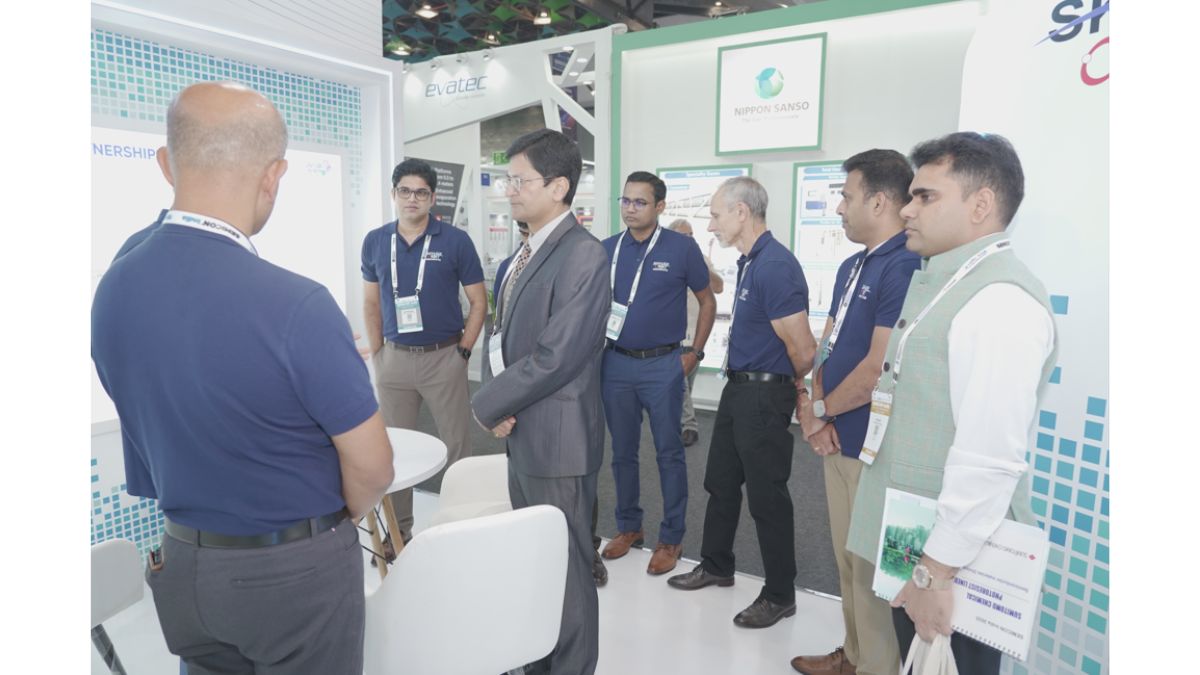
    Greater Noida (Uttar Pradesh) [India] October 10: Nessa Illumination Technologies Private Limited, a key player in industrial LED and solar-based solutions, announced the launch of its Smart Light and Hybrid Solar High Mast at the Renewable Energy India (REI) Expo, Noida.

    The Smart Solar Light, based on NB-IOT technology, is ideal for smart city projects, industries, rural areas, and more applications. This product ensures Accountability, Transparency, and Impact (ATI) for users, offering remote monitoring capabilities for complete control, thereby optimizing operations and improving visibility.

    The Hybrid Solar High Mast provides uninterrupted illumination, prioritizing green energy while offering AC power as a backup. It is designed to enhance safety and security, making it a perfect solution for highways, public spaces, and other large infrastructure projects where reliable lighting is essential.

    Nessa Illumination Technologies Private Limited

    These launches demonstrate Nessa’s success in providing energy-efficient and intelligent lighting solutions, aligning with global sustainability goals. Present at the REI Expo event were Managing Director and CEO Mr. Dhaval Shah, CTO Mr. Devang Shah, and other key members of the Nessa team, reaffirming the company’s commitment to excellence in LED and solar technologies.

    If you have any objection to this press release content, kindly contact pr.error.rectification@gmail.com to notify us. We will respond and rectify the situation in the next 24 hours.

  • KISNA Diamond and Gold Jewellery Launches its 1st Exclusive Showroom in Jaipur

    KISNA Diamond and Gold Jewellery Launches its 1st Exclusive Showroom in Jaipur

    Jaipur (Rajasthan) [India] October 10: KISNA Diamond and Gold Jewellery, is proud to announce the grand opening of its 1st exclusive showroom at M.I Road, Jaipur, Rajasthan. This marks KISNA’s 42nd exclusive showroom nationwide. The inauguration was graced by Mr. Ghanshyam Dholakia, Founder & M.D, Hari Krishna Group, and Mr. Parag Shah, Director, KISNA Diamond & Gold Jewellery.

    To celebrate this grand opening, KISNA is offering up to 100% off on diamond jewellery making charges. Adding to the excitement, KISNA has launched a spectacular lucky draw campaign, #Abki_Baar_Aapke_Liye_Showroom & Win a Car, with 100+ cars to be won. The consumers have to participate by making a Diamond/ Platinum/ Solitaire jewellery purchase of ₹20,000 or more, or a gold jewellery purchase of ₹50,000. Lucky ones will be chosen and gifted a car by KISNA.

    Commenting on the launch, Mr. Ghanshyam Dholakia, Founder & M.D, Hari Krishna Group, stated ‘‘We are delighted to bring KISNA’s first exclusive showroom to Jaipur, a city that embodies royal heritage and fine craftsmanship. This expansion aligns with our vision of ‘Har Ghar KISNA,’ where we aim to be India’s fastest-growing jewellery brand, making every woman’s dream of owning diamond jewellery come true.’’

    Mr. Parag Shah, Director, KISNA Diamond & Gold Jewellery, said, ‘‘Opening our first exclusive showroom in Jaipur is a significant step for KISNA. Jaipur’s deep connection to art and culture aligns perfectly with our vision of offering jewellery that blends tradition with modernity.   We are excited to serve the people of this vibrant city with our exquisite collections inspired by the city’s royal heritage.’’

    Mr. Yash and Mr. Govind Dangayach, Franchise Partner, KISNA, said, ‘’ As the franchise owner of KISNA’s first exclusive showroom in Jaipur, We are proud to bring a brand that represents trust, quality, and exceptional craftsmanship to this beautiful city. We look forward to offering our customers an extraordinary jewellery experience that reflects Jaipur’s rich heritage and modern elegance.’’

    The newly launched KISNA showroom promises to be a destination of choice for anyone searching for jewellery near them. Whether it’s gold diamond necklaces, diamond rings for men and women, gold diamond earrings for women and so on, the showroom offers an extensive range to suit every style.

    In line with KISNA’s commitment to giving back to the community, KISNA organized a tree plantation drive as part of the launch event. Additionally, KISNA also hosted a food distribution drive for the underprivileged and educational assistance for those in need.

    About KISNA Diamond & Gold Jewellery

    Launched in 2005, KISNA is the flagship diamond jewellery brand from the Hari Krishna Group. KISNA has established an extensive distribution network, reaching over 3,000+ showroom-in-showroom showrooms across 28 states in India. The brand has over 42+ exclusive showrooms across India. With an ethical sourcing of diamonds from mines to market, KISNA has an unmatched portfolio of 10,000+ unique designs.  KISNA offers a wide range of Rings, Earrings, Pendants, Mangalsutra, Necklaces, Bangles, Bracelets, and Nose Pins in 14KT & 18KT gold which are 100% IGI Certified and BIS Hallmarked. The company also provides 90% Buyback & 95% Exchange on diamond jewellery including making charge.

    KISNA Diamond & Gold Jewellery’s online platform is a curated space where elegance meets convenience. As your trusted online brand, we offer a seamless showrooming experience, featuring latest diamond and gold jewellery designs. Explore timeless sophistication with KISNA, your ultimate destination for authentic and stylish pieces on www.kisna.com

    If you have any objection to this press release content, kindly contact pr.error.rectification@gmail.com to notify us. We will respond and rectify the situation in the next 24 hours.